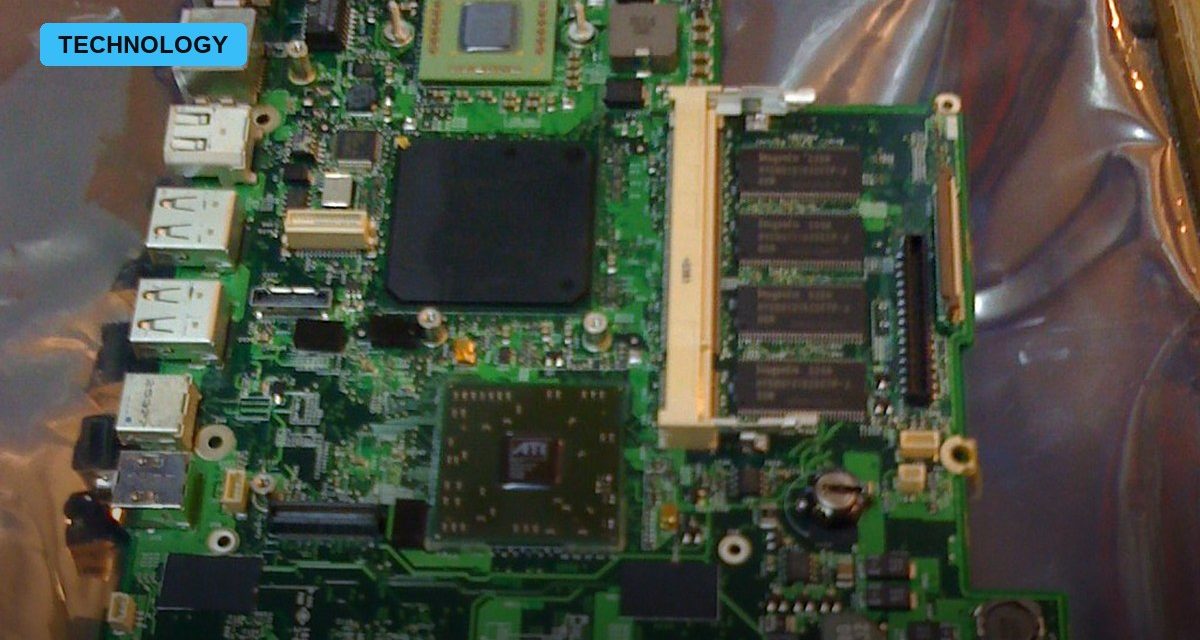
Intel’s turnaround bid just got its first public proof point. Fortinet has signed on to have Intel Foundry manufacture its next-generation Security Processor 6, the chip that underpins the FortiGate firewall line, according to CNBC’s reporting on July 21. It is the first named external customer for Intel’s contract manufacturing business since Lip-Bu Tan took over as chief executive in March 2025, and it lands at a moment when investors are searching for any sign that Intel’s multibillion-dollar foundry bet is starting to pay off.
The deal in specifics
Fortinet’s SP6 chip will be built on the Intel 4 process node, the company confirmed. Intel 4 is a comparatively mature node in Intel’s roadmap, not its bleeding-edge 18A or 14A technology, which makes the Fortinet win notable more for its symbolism than its size — a real, named, non-Intel product committing to Intel’s fabs after years of the foundry business existing mostly as an internal supplier and a story about future potential.
Why foundry matters so much to Intel right now
Intel Foundry’s business generated $5.8 billion of Intel’s total revenue in the second quarter of 2026, with foundry unit revenue growing 31% year over year — above the company’s own 25% internal target, according to Intel’s Q2 earnings disclosures. That growth is coming almost entirely from internal Intel chip production still being booked through the foundry unit’s books under its new accounting structure; external customers have been the missing piece. Tan has repeatedly told investors and reporters that winning outside customers is the only way to prove Intel Foundry can become a genuine competitor to TSMC and Samsung rather than a captive manufacturing arm.
Progress on the process roadmap
Beyond the Fortinet news, Intel Foundry has been hitting technical milestones. The company’s Intel 18A-P variant entered risk production on schedule, and Intel has begun high-volume manufacturing of a subset of its Panther Lake-branded Core Ultra Series 3 processors using ASML’s EXE High-NA extreme ultraviolet lithography tools — technology TSMC has been slower to adopt at scale. Intel executives have framed this as evidence the company is closing, not just narrowing, its historical process-technology gap with TSMC.
The skeptical view
Wall Street’s reaction has been more cautious than triumphant. Analysts and industry observers point out that a single security-chip customer on a mid-tier node is a far cry from the marquee AI or smartphone customers — the Nvidias, Apples and Qualcomms of the world — that would truly validate Intel Foundry’s ability to compete for leading-edge business. Skeptics also note Intel has missed foundry customer-acquisition targets before, and that Intel 18A yields and 14A development remain unproven at the volumes needed to win the largest global customers away from TSMC.
The bull case
Supporters counter that foundry customer relationships build in stages — smaller, lower-risk designs first, leading-edge and higher-volume commitments later, once a customer has verified quality and reliability. Fortinet, a real networking and security company with meaningful chip volumes, is a credible reference customer other prospective clients can point to during their own due diligence. Forbes’ analysis of Intel Foundry earlier this year described 2026 as a potential inflection point, and Tan’s team appears to be using every incremental win, including this one, to build that narrative with investors and prospective customers alike.
What’s next for Intel Foundry
The real test will be whether Fortinet is followed by additional named customers, particularly any signing onto Intel’s most advanced 18A or upcoming 14A nodes rather than the more mature Intel 4 process. Intel has signaled it expects more customer announcements as 18A ramps toward higher-volume production later in 2026 and into 2027. For a company that ceded process leadership to TSMC over the past decade, each new customer name is a small but real data point in whether Pat Gelsinger’s foundry strategy, now being executed by Lip-Bu Tan, can actually restore Intel’s manufacturing relevance.
Tan has staked much of his early tenure on convincing Wall Street and prospective customers that Intel Foundry can be judged on its own merits rather than treated as an extension of Intel’s struggling product business. Additional customer wins on Intel’s leading-edge nodes, rather than mature ones like Intel 4, would go furthest toward proving that case, and executives have hinted more announcements are coming as design-in cycles for 18A and 14A customers mature over the next several quarters.