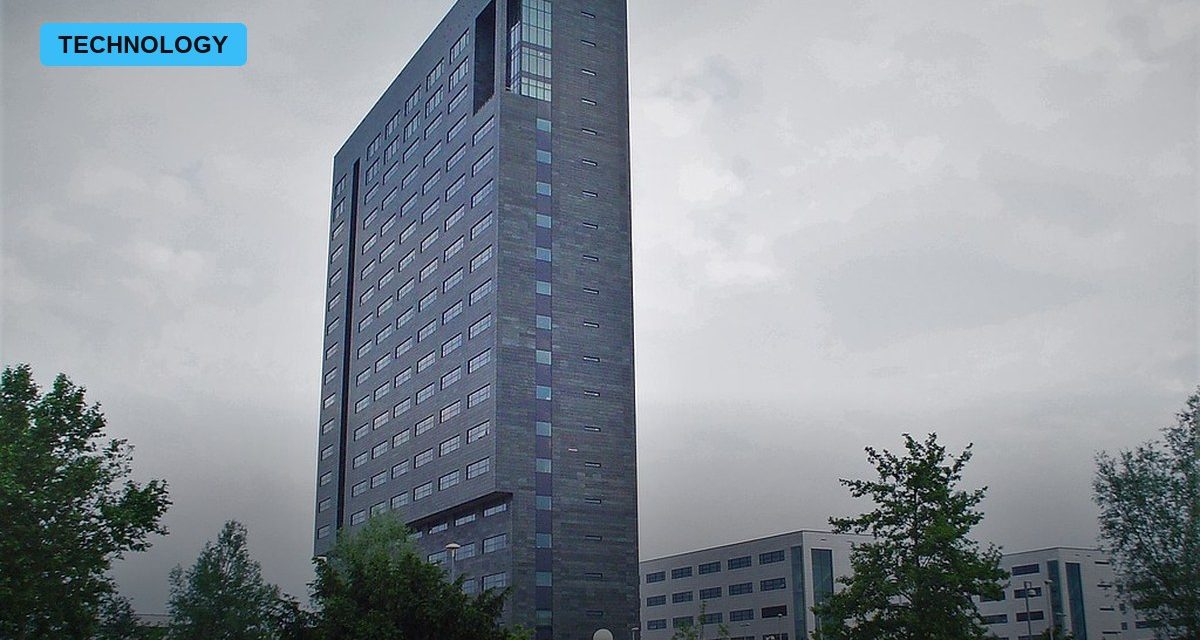
ASML, the Dutch company that holds a near-monopoly on the extreme ultraviolet lithography machines needed to make the most advanced chips, posted second-quarter 2026 results that beat its own guidance and eased months of anxiety about its exposure to China. The company reported €9.3 billion in total net sales and a 54% gross margin for the quarter, according to ASML’s official Q2 2026 press release, and lifted its full-year revenue forecast to a range of €43 billion to €45 billion.
A China rollercoaster finally levels off
The headline number obscures a bumpier story underneath. China’s share of ASML’s system sales had plummeted from 36% in the fourth quarter of 2025 to just 19% in the first quarter of 2026, as tightening U.S. and Dutch export restrictions on lithography equipment cut off large swaths of Chinese demand. By the second quarter, that slide stabilized, with China settling at roughly 20% of total net sales — still a meaningfully smaller slice than a year earlier, but no longer in free fall. ASML executives described remaining China demand as increasingly concentrated in mature logic chip production serving domestic-led demand, rather than leading-edge work. The company’s finance chief noted on the earnings call that Chinese fabs are now buying older-generation deep ultraviolet systems almost exclusively, since the newest EUV machines remain barred from export to Chinese customers under both U.S. and Dutch rules, a restriction that has held steady even as broader trade tensions have eased on other fronts.
Where the growth is actually coming from
The bigger story in ASML’s results is what’s replacing the lost China volume: AI-driven demand for both logic and memory chips elsewhere in the world. ASML projected net system sales growth exceeding 25% in logic and a striking 75% in memory for the full year, reflecting the memory industry’s scramble to build capacity for high-bandwidth memory used in AI accelerators. That memory growth figure in particular reflects the broader HBM supply crunch playing out across Samsung, SK Hynix and Micron, all of which need ASML’s tools to expand advanced memory production. Logic demand, meanwhile, is being pulled higher by TSMC, Intel and Samsung as they race to add 2-nanometer and 3-nanometer capacity for AI accelerator customers including Nvidia, AMD and Broadcom, each of whom depends on ASML’s lithography roadmap staying on schedule to hit their own production targets.
Wall Street’s reaction
Analysts largely cheered the results. Multiple firms — JPMorgan, Citigroup, Susquehanna and Berenberg among them — confirmed or upgraded buy ratings on ASML stock following the earnings report and raised guidance, according to coverage aggregated by Ad Hoc News. The read-through for the broader chip-equipment sector was similarly positive: if the single most China-exposed, most geopolitically scrutinized company in the semiconductor supply chain can grow guidance, the argument goes, AI-driven capital spending elsewhere is more than compensating for lost Chinese revenue.
The lingering China question
Not every observer is ready to declare the China risk resolved. ASML’s stock had sunk earlier in the year, in April, even after a strong quarterly report, specifically on tightening China restrictions — a reminder that policy risk can override fundamentals overnight. Critics of the current export-control regime argue that ASML’s China revenue could resume falling sharply if Washington or The Hague tighten rules further, particularly around servicing and spare parts for machines already installed in Chinese fabs, which remains a gray area in current restrictions. ASML executives have consistently declined to predict where China revenue settles longer-term, citing policy uncertainty as the single hardest variable in their own forecasting.
What it means for the equipment supply chain
ASML’s results matter well beyond its own balance sheet because it is the bottleneck supplier for the entire advanced chip industry — no company can manufacture leading-edge logic or high-density memory without ASML’s EUV and High-NA EUV tools. Intel’s recent adoption of ASML’s EXE High-NA EUV technology for Panther Lake production, and Samsung and SK Hynix’s aggressive HBM capacity expansions, both depend on ASML deliveries arriving on schedule. If ASML’s 25%-logic, 75%-memory growth projections hold, it suggests the AI memory shortage that has driven HBM sellouts through 2027 is set to persist rather than ease anytime soon, since expanding memory capacity itself requires the lithography tools ASML is only now ramping up to supply.