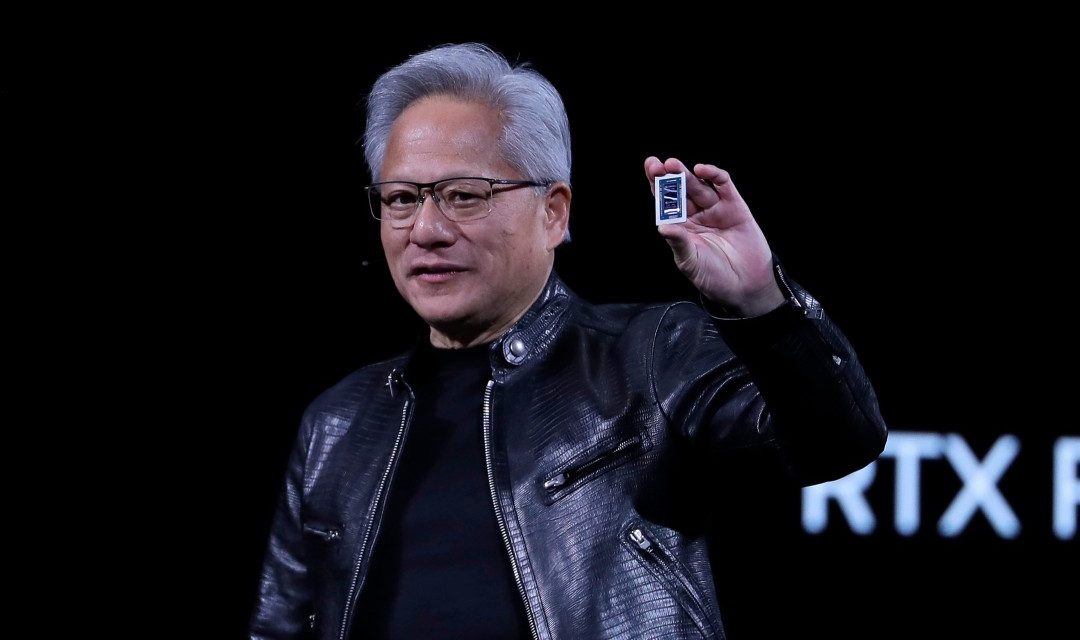
Nvidia is no longer content to live inside the PC.
It wants to redefine the PC.
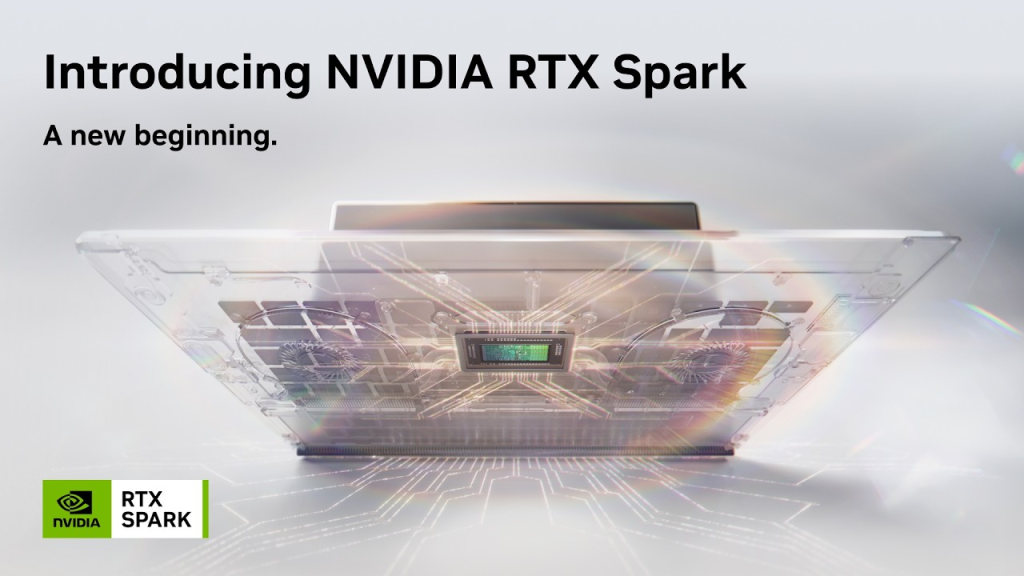
The company unveiled RTX Spark, a new Windows-focused AI superchip platform developed with Microsoft and built around local personal AI agents. Nvidia says RTX Spark brings a full CUDA and RTX ecosystem to slim Windows laptops and compact desktops, with up to 128GB of unified memory and 1 petaflop of AI performance. Devices are expected from major PC makers including ASUS, Dell, HP, Lenovo, Microsoft Surface, and MSI.
That is not just another chip launch.
That is Nvidia entering the personal computer market with a new thesis: the next PC will not be defined by the CPU. It will be defined by the AI workload.
For decades, Intel owned the center of the PC. AMD challenged it on performance and price. Qualcomm tried to bring mobile-style efficiency into Windows laptops. Apple proved that custom silicon could change consumer expectations. But Nvidia mostly sat beside the main processor, selling graphics power to gamers, creators, engineers, and later AI developers.
RTX Spark changes the posture.
Nvidia is now saying the PC itself should be built around AI acceleration, local agents, creator workflows, gaming, graphics, and model inference. That puts it directly in the path of Intel, AMD, and Qualcomm. The battleground is no longer just battery life or benchmark scores. It is whether the laptop becomes a private, local AI machine.
That framing is powerful because it attacks the old PC cycle at its weakest point.
Consumers have had fewer reasons to upgrade. A five-year-old laptop can still browse, stream, edit documents, and run basic apps. The traditional upgrade pitch has become stale: thinner, faster, better battery, better screen. Useful, but not urgent.
AI gives the industry a new reason to sell hardware.
If the next generation of software depends on local agents that can read files, summarize meetings, edit video, generate images, automate workflows, code, search personal data, and run models privately, then the PC suddenly matters again. Not as a screen. As a compute node.
That is the opportunity Nvidia sees.
The cloud will not disappear. The biggest models will still run in data centers. But not every task should go to the cloud. Privacy, latency, cost, and personalization all create demand for on-device AI. A user may want an assistant that can search local files without uploading everything. A creator may want video tools that work quickly without waiting for remote compute. A developer may want local model testing. A business may want AI productivity without exposing sensitive data.
Nvidia’s advantage is that it already owns the developer mindshare around AI acceleration. CUDA is not just a technical feature; it is an ecosystem. Developers know it. Tools support it. Researchers rely on it. Enterprises build around it. Bringing that stack deeper into Windows PCs gives Nvidia a software advantage that many chip competitors cannot easily copy.
That is why this launch matters to Intel and AMD.
Intel still has scale, relationships, manufacturing strategy, and decades of PC dominance. AMD has execution momentum and strong performance credibility. Qualcomm has efficiency and Arm expertise. But Nvidia has the AI narrative. In this market, narrative matters because it shapes developer attention, OEM design priorities, and investor expectations.
If RTX Spark works, PC buyers may stop asking, “Which CPU is inside?” and start asking, “How much local AI can this machine run?”
That would be a major shift.
The risk is that AI PCs become another marketing label. Consumers have heard many upgrade stories before. Touchscreens, tablets, ultrabooks, 3D, VR, metaverse, foldables, and always-connected laptops all promised to transform computing. Some succeeded in niches. Others faded. AI PCs will need real use cases, not demo-stage magic.
There is also a price problem. Premium AI hardware may impress developers and creators before it reaches mainstream buyers. Enterprises may move cautiously because local agents raise security and compliance questions. Battery life, software compatibility, thermals, and cost will all matter. A great chip does not guarantee a great product category.
But Nvidia does not need to win the entire PC market immediately.
It needs to change the direction of the conversation.
And it has.
The PC market had become a replacement market. Nvidia is trying to make it an AI infrastructure market. That reframes laptops and desktops as endpoints in the AI economy, not just productivity devices. It gives PC makers a reason to build new premium categories. It gives Microsoft a hardware story for AI-native Windows. It gives developers a local platform. It gives investors another way to extend the AI trade beyond data centers.
This is why the old PC hierarchy should be nervous.
Nvidia is not entering as a low-cost challenger. It is entering as the company that already won the AI accelerator market, already captured Wall Street’s imagination, and already has the software stack developers associate with high-performance AI.
Intel’s house is not empty. AMD is not weak. Qualcomm is not finished.
But Nvidia just walked in through the front door.
And it brought the AI cycle with it.