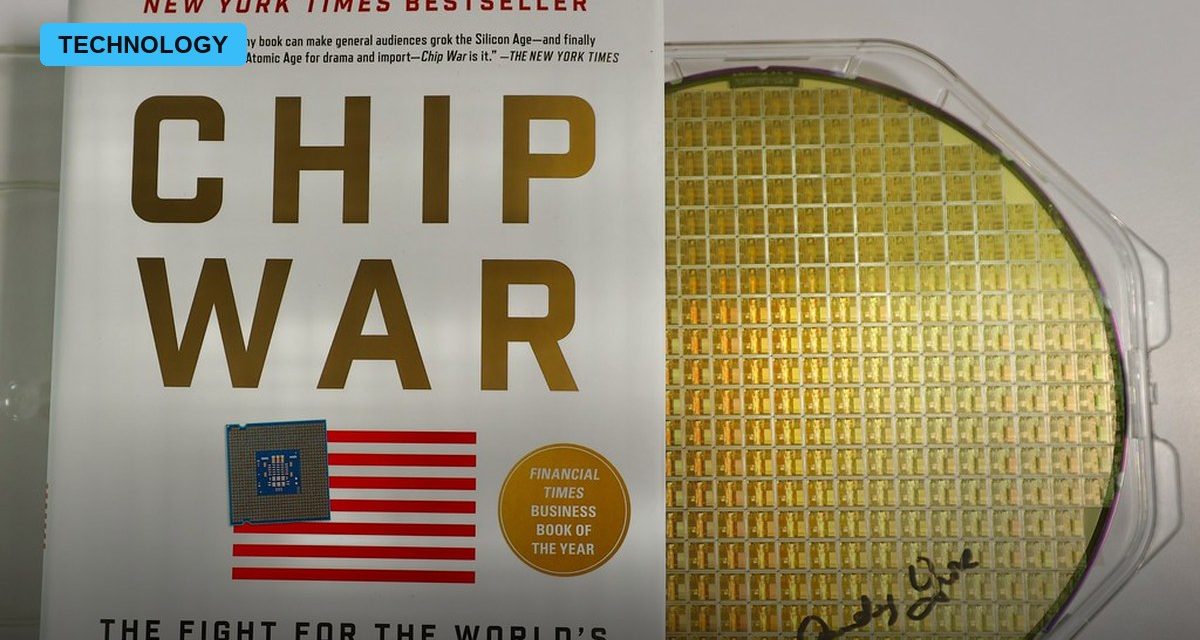
Taiwan Semiconductor Manufacturing Co. is spending more money, faster, to keep up with demand it says it can barely satisfy. The world’s largest contract chipmaker raised its 2026 capital expenditure plan to a range of $60 billion to $64 billion, according to Yahoo Finance’s coverage of the company’s updated guidance, with roughly 70% to 80% of that spending directed toward its most advanced process technologies. The company is adding three new 3-nanometer fabrication plants across Taiwan, Arizona and Kumamoto, Japan, and converting some existing 5nm production lines to free up more 3nm capacity.
The demand driving the spend
The surge traces directly back to AI accelerator orders. TSMC’s customer list for advanced nodes includes Nvidia, AMD and Broadcom, all of whom need TSMC’s most advanced manufacturing to produce the GPUs and custom AI chips at the center of the current data-center buildout. TSMC has said it is now targeting 180,000 3nm wafers per month by year-end, a goal it now expects to reach potentially by the fourth quarter — ahead of its original schedule, according to Yahoo Finance’s reporting on the revised capex and revenue forecast.
June revenue already flashing the trend
The numbers behind the guidance bump were already visible earlier in the summer. CNBC reported that TSMC’s June revenue surged 68% year over year, running ahead of the company’s own second-quarter forecast. That kind of growth, sustained across a company already generating tens of billions of dollars in quarterly sales, is unusual even by the standards of the current AI boom and reflects just how bottlenecked advanced chip supply has become relative to demand from AI labs and hyperscalers.
Geopolitics baked into the expansion map
The choice of where TSMC is building matters as much as how much it is spending. Splitting new 3nm capacity across Taiwan, Arizona and Kumamoto reflects years of pressure from the U.S. and Japanese governments to diversify advanced chip manufacturing away from a single geographic point of failure — Taiwan’s proximity to China and the geopolitical risk that implies. The Arizona expansion in particular ties into U.S. CHIPS Act-era incentives and continued political pressure for TSMC to manufacture leading-edge chips on American soil rather than exporting only from Taiwan.
Bull case: an AI supercycle with no end in sight
Investors have mostly cheered the spending increase. TSMC shares reportedly jumped as much as 7% in early August after Microsoft revived enthusiasm around the AI-chip trade, a sign that markets view TSMC’s expanded capex less as a cost risk and more as confirmation that customer demand justifies the investment. Bulls argue that TSMC’s near-monopoly on leading-edge logic manufacturing — process nodes below 3nm — gives it pricing power and a demand backlog that should support years of elevated capital spending without margin erosion.
Bear case: capex risk and cyclical exposure
Skeptics point out that semiconductor capital spending is historically cyclical, and a $60-plus billion annual capex commitment assumes AI infrastructure demand keeps compounding at its current pace indefinitely. If any major customer — Nvidia, AMD, Broadcom, or the hyperscalers ultimately buying their chips — slows AI infrastructure spending due to overcapacity, financing costs or disappointing AI returns, TSMC’s newly expanded 3nm and 2nm fabs could face utilization risk just as depreciation costs from the buildout hit the income statement. Some analysts have also flagged execution risk in running simultaneous fab expansions across three countries with different labor markets, regulatory environments and construction timelines.
What’s next
Watch TSMC’s next quarterly report for whether the 180,000-wafer-per-month 3nm target is actually hit ahead of schedule, and for early signals on 2nm ramp timing, which is where the next generation of AI accelerators from Nvidia and others is expected to land. Also worth tracking: whether TSMC’s Arizona fabs hit their own production targets on schedule, given the years of delays that have dogged earlier phases of that project. For now, TSMC’s message to the market is unambiguous — it believes AI chip demand justifies spending at a pace few semiconductor companies in history have ever attempted.
Analysts will also be parsing TSMC’s commentary on customer concentration risk, since a handful of AI-focused customers now account for an outsized share of incremental revenue growth, a dependency that magnifies the impact if any single customer’s order volumes shift. For now, though, the company’s own guidance suggests it sees no near-term slowdown, and its willingness to commit tens of billions of dollars years in advance of demand materializing is itself among the clearest signals in the industry that the current AI infrastructure buildout has further to run.