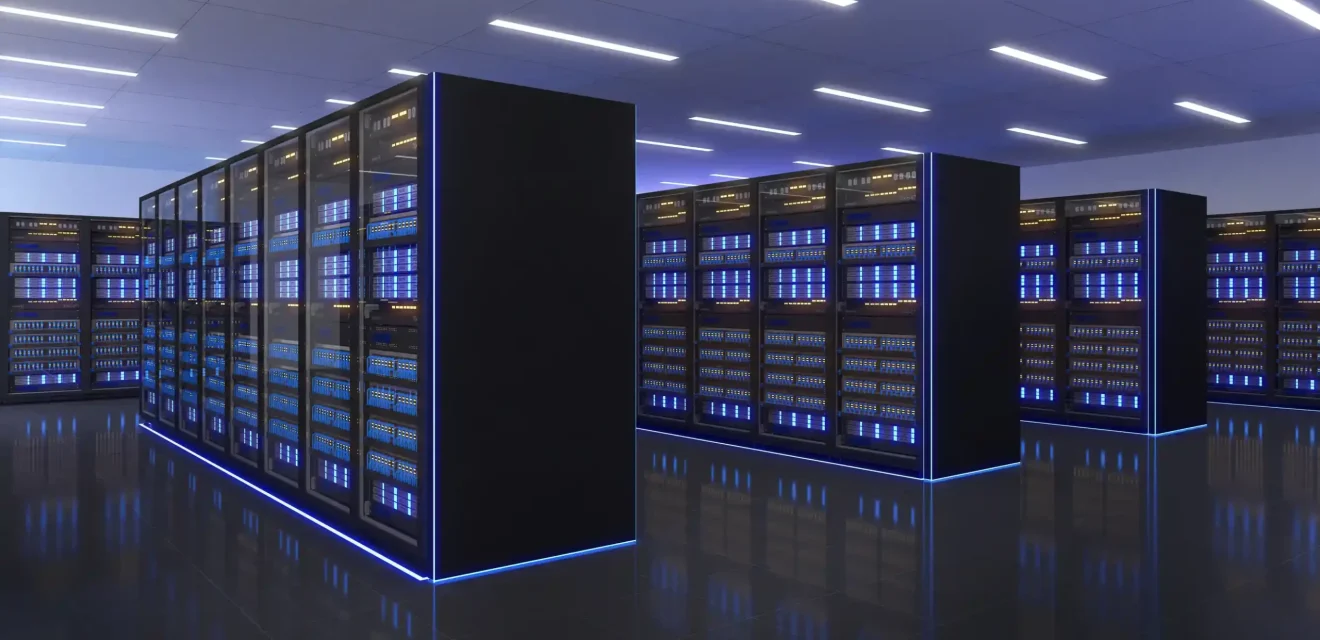
AMD said on July 20, 2026 that it has begun shipping its first rack-scale AI system, code-named Helios, with Microsoft Azure confirmed as a new customer — the clearest signal yet that AMD is trying to convert years of chasing Nvidia into an actual dent in its data-center dominance. Helios bundles AMD’s Instinct MI455 GPUs, Venice CPUs and Pensando DPUs into a single integrated rack built specifically for AI inference workloads, positioning it as AMD’s direct answer to Nvidia’s Grace Blackwell and upcoming Vera Rubin systems.
A $5 million rack aimed at Nvidia’s weak spot
Each Helios rack is estimated to cost between $5 million and $5.5 million, according to CNBC’s reporting on the launch. Rather than selling GPUs piecemeal, AMD is following Nvidia’s own playbook of shipping fully integrated, liquid-cooled rack systems that hyperscalers can drop into existing data-center footprints with minimal reengineering. The bet is that inference — running trained models in production, as opposed to training them from scratch — is the fastest-growing and most price-sensitive segment of AI compute, and the one where AMD’s per-dollar performance claims have the most room to matter.
Just how big Nvidia’s lead still is
The scale of what AMD is up against is stark. Futurum Group estimates cited by CNBC put Nvidia’s share of the data-center GPU market at roughly 95%, with AMD holding around 4.5%. That gap reflects not just chip performance but Nvidia’s CUDA software ecosystem, which has become the default programming layer for AI development over the past decade and which competitors have struggled to dislodge regardless of raw hardware specs. Microsoft’s decision to buy into Helios doesn’t change that math overnight, but it does put a second major hyperscaler’s name behind AMD’s rack-scale ambitions.
Meta, OpenAI and Oracle are already in
Microsoft isn’t AMD’s first big win. Meta has committed to as much as 6 gigawatts of AMD GPU capacity, with roughly 1 gigawatt of Helios racks targeted for deployment this year alone. OpenAI, Oracle and Tata Consultancy Services have also signed on as Helios customers, according to AMD’s disclosures around the launch. Taken together, the customer list reads like a checklist of the companies with the deepest AI infrastructure budgets in the world — exactly the accounts AMD needs if it’s going to move its market-share number in a meaningful way rather than simply diversifying at the margins.
Why hyperscalers want a second supplier
Part of what’s driving Microsoft and Meta toward AMD has less to do with AMD’s chips being better and more to do with hyperscalers wanting leverage. Relying on a single supplier that controls 95% of the market leaves buyers exposed to allocation constraints, pricing power and roadmap risk they can’t control. Diversifying AI silicon suppliers — even in relatively modest volumes at first — gives Microsoft and Meta a credible alternative to point to in negotiations with Nvidia, regardless of whether AMD’s hardware wins head-to-head benchmarks in every workload.
The skeptics’ case
Not everyone reads the Microsoft deal as a turning point. Some analysts, per coverage from outlets including 24/7 Wall St., argue this is exactly the kind of validation AMD has needed to close the infrastructure gap on Nvidia. Others are more cautious, pointing out that Nvidia’s CUDA software moat and near-total share of existing AI training pipelines mean one hyperscaler diversifying a slice of its inference capacity is unlikely to meaningfully erode Nvidia’s near-term position. Software lock-in, not chip specs, has been the primary reason previous challengers to Nvidia’s dominance — including AMD’s own earlier MI300 push — failed to convert technical competitiveness into market share.
What it means going forward
The Helios launch fits a broader pattern taking shape across 2026: major AI buyers deliberately building multi-vendor supply chains rather than betting everything on a single chipmaker, even one as dominant as Nvidia. Whether that translates into a durable shift in market share depends on whether AMD can keep shipping Helios racks at volume, keep its software stack (ROCm) usable enough for developers migrating off CUDA, and keep landing the kind of marquee customers that make the next hyperscaler’s decision easier. For now, Nvidia’s 95% share isn’t going anywhere fast — but the fact that Microsoft, Meta, OpenAI and Oracle are all now writing checks to AMD suggests the pressure on Nvidia’s pricing power and negotiating leverage is starting to build, even if the volume numbers haven’t caught up yet.