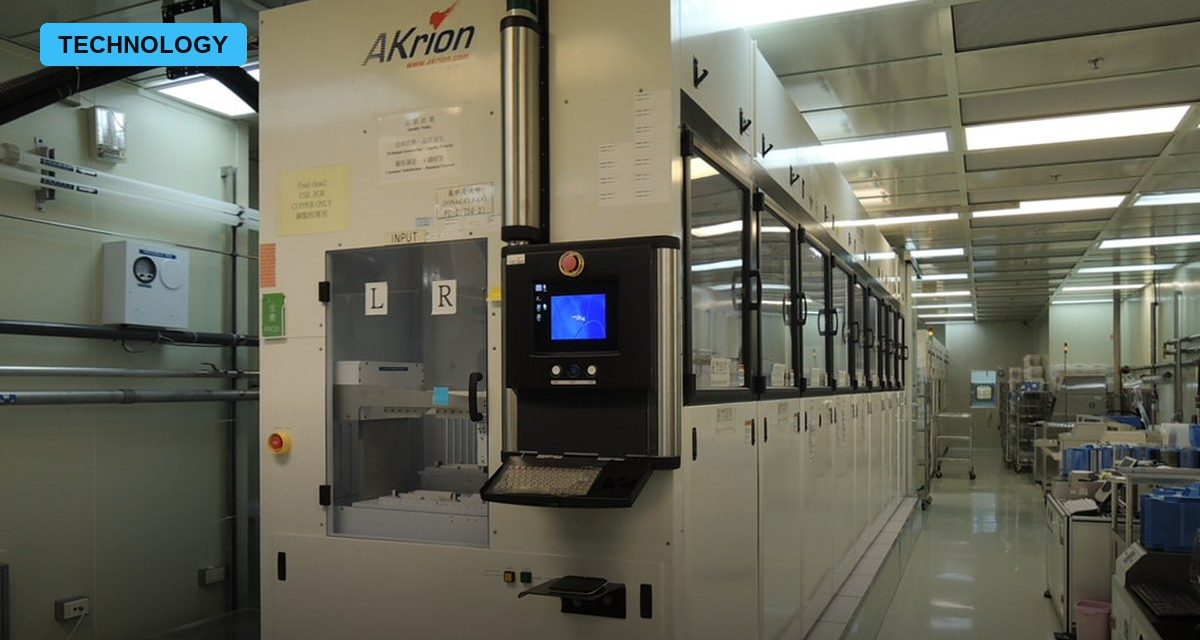
The AI boom is now reshaping how the chips behind it are made. Nvidia and TSMC have announced a push to bring artificial intelligence and accelerated computing deep into semiconductor design and manufacturing — including a virtual factory called FabTwin. The collaboration turns the world’s leading chipmaker into a testbed for AI-driven production, signaling a shift in how the most advanced fabs are planned and run.
A digital twin of the fab
The centerpiece is simulation. TSMC is exploring Nvidia Omniverse technologies to build FabTwin, a virtual environment that mirrors a real fabrication plant. The digital twin lets engineers model the factory before a single machine is installed, shifting key decisions into software.
Testing before building
The payoff is foresight. FabTwin is designed to simulate fab layouts and manufacturing workflows, letting TSMC digitally test different factory configurations and identify bottlenecks early. Catching problems virtually can save enormous time and cost versus fixing them on a live production line.
AI in design too
The effort spans the pipeline. Nvidia says TSMC is using its accelerated computing and AI to advance both semiconductor design and manufacturing, not just factory planning. AI tools increasingly assist the intricate work of laying out and optimizing cutting-edge chips.
Why fabs are so hard
Chip plants are among the most complex facilities on Earth. A modern fab packs thousands of precise, interdependent steps, and any bottleneck ripples across output. Modeling that complexity digitally offers a way to tame a notoriously unforgiving manufacturing process.
A symbiotic loop
The relationship is self-reinforcing. Nvidia’s chips power the AI that now helps TSMC build better chips, which in turn enables more powerful AI. The partnership captures how AI has become both the product of advanced fabs and a tool for improving them.
The competitive stakes
Efficiency is a weapon. With demand for AI accelerators surging, squeezing more yield and speed from fabs is a strategic advantage. AI-driven manufacturing could help leaders like TSMC stay ahead as rivals race to expand capacity.
Why it matters
This is the industrial side of the AI boom. As AI moves from the data center into the factory, it reshapes how the underlying hardware is built, planned and optimized. Smarter fabs mean faster, cheaper, more reliable chips — the foundation everything else depends on.
The bottom line
Nvidia and TSMC are bringing AI deep into chip manufacturing, with a FabTwin digital twin that simulates fabs before they are built and AI tools aiding design. The move shows AI reshaping the factories that make it possible. The chip industry is building smarter from the ground up.