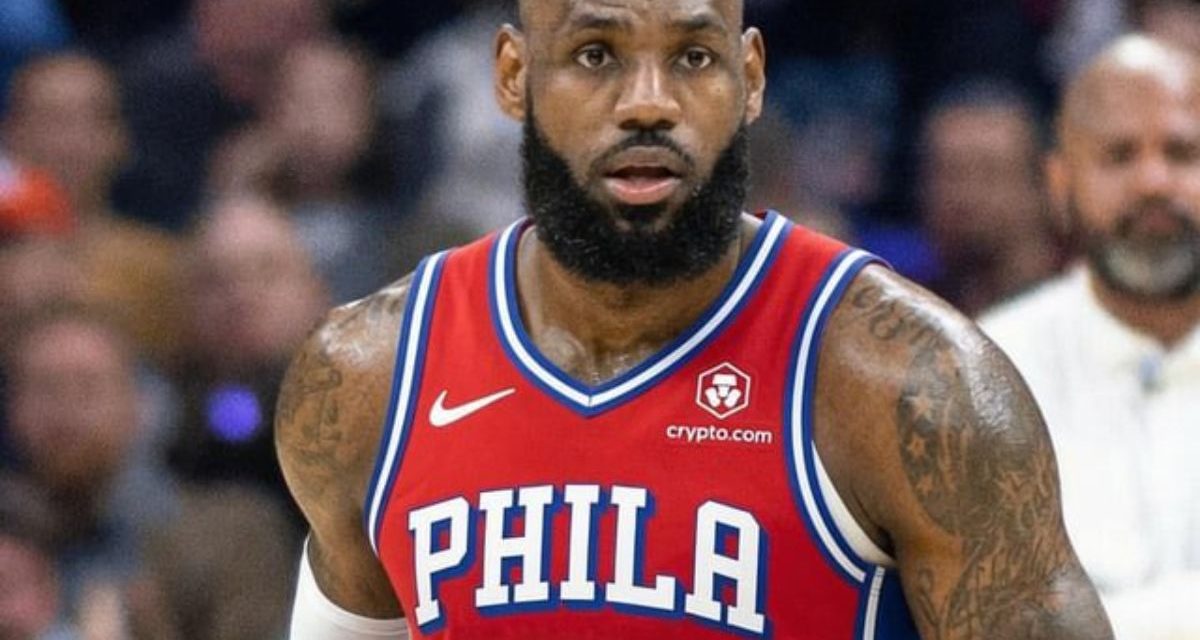
Philadelphia — Now that LeBron James has committed to the Philadelphia 76ers, attention is turning to the fine print of his contract and what it signals about how much longer he plans to play.
The deal itself is a steep pay cut. James made roughly $52.6 million last season with the Lakers; his new two-year, $8 million agreement with Philadelphia pays the NBA veteran’s minimum, worth about 2.35% of the salary cap. It’s a notable structural choice, too — rather than sign a single-year deal, James took a two-year contract with a player option for year two, which some analysts read as a hint he isn’t ready to commit to retirement just yet.
The unusual structure also complicates things slightly for Philadelphia’s front office. Because James signed a multi-year minimum contract rather than a one-year deal, the team won’t get the salary-cap relief it would normally receive for signing a veteran at the minimum, meaning his full salary counts against the cap. To fit him onto the roster, the 76ers are expected to waive a player on a non-guaranteed contract.
Beyond the money, the more interesting story is why James chose Philadelphia over the Cavaliers, Heat, Warriors and a return to Cleveland. People familiar with his thinking told ESPN that the decision came down almost entirely to which roster gave him the best realistic shot at a fifth championship before he retires. His agent, Rich Paul, also suggested James wanted to leave his Miami years untouched rather than risk a second stint there diluting those memories.
The basketball case for Philadelphia is straightforward on paper: James joins Joel Embiid, Tyrese Maxey, Jaylen Brown and rookie standout VJ Edgecombe in what several NBA insiders have called one of the most talented starting lineups ever assembled. The 76ers haven’t reached the Eastern Conference finals since 2001, and last season ended in a second-round sweep at the hands of the Knicks. Adding James and Brown, acquired this summer in a trade that sent Paul George to Boston, is meant to raise the team’s ceiling significantly.
The obvious risk is health. Embiid has played fewer than 40 games in three straight seasons, and James turns 42 during the upcoming campaign. If both stay on the floor, evaluators say Philadelphia has the talent to compete for a title; if either goes down for an extended stretch, the fit questions around an aging, deep roster could resurface quickly.
For now, the deal leaves open one more question that Philadelphia fans have been asking all summer: whether James’ son, Bronny, might eventually join him in a 76ers uniform. Reporting since Friday’s announcement suggests that outcome is considered unlikely for next season.