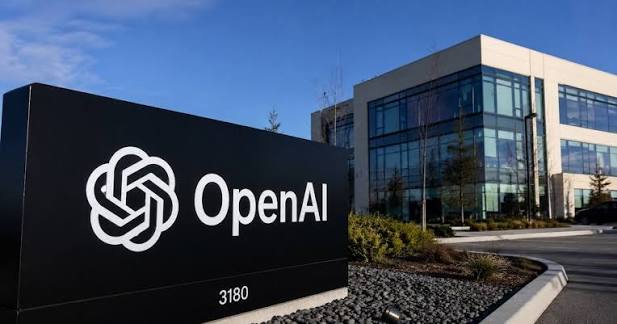
Nvidia is in talks to backstop as much as $250 billion in financing for a colossal data center hub in Ohio that OpenAI plans to lease, according to reporting from the Wall Street Journal corroborated by Bloomberg and Reuters on July 26 and 27, 2026. The facility, a roughly $500 billion, 10-gigawatt campus being developed by SoftBank Group, would be one of the largest computing installations ever built — and the financing structure being discussed would make Nvidia not just the chip supplier but the guarantor standing behind the debt that pays for the building itself.
A Chipmaker Becomes a Banker
Under the terms being discussed, Nvidia would guarantee up to $250 billion tied to the lease and construction financing of the Ohio facility, which is targeted for completion around 2028. That is separate from a second, even larger conversation: Nvidia is also said to be discussing financing OpenAI’s chip purchases worth up to $350 billion. Combined, the two arrangements would make Nvidia both OpenAI’s principal supplier and one of its largest financial backers — a role reversal for a company that built its trillion-dollar valuation purely on chip sales.
Why OpenAI Wants Its Own Building
OpenAI has spent much of 2026 trying to loosen its dependence on Microsoft Azure, Amazon, and Oracle for the raw compute that trains and runs its models. Leasing a dedicated 10-gigawatt hub — enough power to run a mid-sized country — would give the company a scale of infrastructure it currently has to share or rent piecemeal. It follows OpenAI’s earlier Stargate-style commitments with Oracle and SoftBank, part of a broader 2026 pattern in which AI labs have moved from renting cloud capacity to underwriting entire physical campuses built specifically for them.
The Numbers Behind the Deal
The scale is difficult to overstate. A $500 billion facility is roughly the size of a small country’s annual GDP. Nvidia’s proposed $250 billion backstop would cover the lease and debt financing of the physical hub alone, not including the chips that will fill it. Rivals including Anthropic, Microsoft, and Google are reportedly also circling the same Ohio site for potential leased capacity, suggesting the facility could end up serving multiple competing AI labs under one roof — an unusual arrangement in an industry defined by fierce competition for scarce compute.
The Circularity Problem
Not everyone is cheering. Investor Michael Burry, known for betting against the 2008 housing bubble, reacted to the reports with pointed skepticism, writing simply, \”Around and around we go\” — a reference to the circular nature of the financing. The concern: Nvidia would effectively be lending money to its own biggest customer so that customer can keep buying Nvidia’s chips. Critics say this echoes vendor financing arrangements from the dot-com era, when equipment makers propped up telecom customers’ balance sheets to keep revenue flowing, only for the underlying demand to prove less durable than the financing implied.
Bulls See a Hedge, Bears See a Bubble
Supporters of the arrangement argue it makes sense for both sides. For OpenAI, owning or controlling dedicated infrastructure is a hedge against capacity constraints at Microsoft, Oracle, and Amazon, all of which are also trying to meet their own soaring AI demand. For Nvidia, guaranteeing the financing locks in years of predictable chip orders in a market where demand visibility is otherwise hard to come by. But the bear case is straightforward: if OpenAI’s revenue growth stalls or a cheaper competitor emerges, Nvidia is exposed twice over — once as the unpaid chip supplier, and again as the guarantor of the building’s debt. That concentration of risk in a single counterparty is exactly the kind of structure that regulators and short sellers watch closely.
What’s Next
The negotiations remain early-stage and could still collapse or be restructured before signing. Analysts will be watching several threads in the coming weeks: whether SoftBank finalizes the debt structure for the Ohio campus, whether Microsoft, Anthropic, or Google actually secure leased capacity at the same site, and how Nvidia addresses the financing talks in its upcoming earnings call. The deal also lands in the middle of a broader \”AI capex payback\” debate already swirling around Amazon, Meta, and Microsoft’s second-quarter results, as investors increasingly ask whether the hundreds of billions being poured into AI infrastructure will generate returns to match. For now, the Ohio hub stands as the clearest example yet of how deeply intertwined the fortunes of the AI industry’s biggest players have become — and how much is riding on demand for artificial intelligence continuing to grow at its current, extraordinary pace.