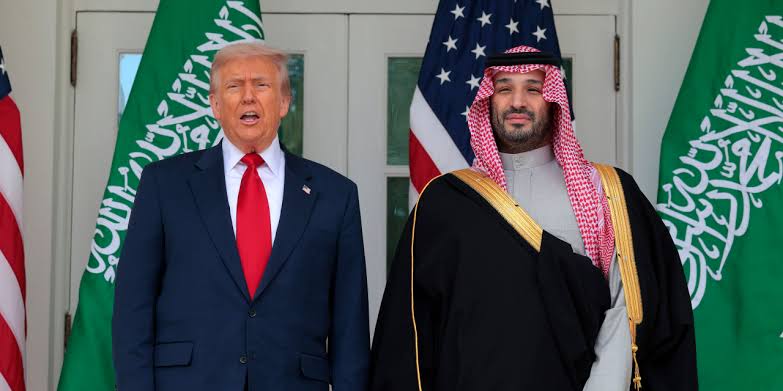
A civilian nuclear cooperation agreement the U.S. signed with Saudi Arabia this week has been thrown into uncertainty after President Trump added a condition that wasn’t part of the original deal: Riyadh must normalize relations with Israel first.
The nuclear pact, signed by Energy Secretary Chris Wright and Saudi Energy Minister Prince Abdulaziz bin Salman, would give American companies priority access to help build out Saudi Arabia’s civilian nuclear program. When the Energy Department announced the agreement, it made no mention of any link to Israel. A day later, Trump posted on social media that the deal was “totally subject” to Saudi Arabia joining the Abraham Accords, the normalization framework brokered during his first term that so far includes the UAE, Bahrain, Morocco and Sudan. He also said the agreement would not permit any uranium enrichment.
The move caught even members of his own administration off guard — White House press secretary Karoline Leavitt acknowledged Trump had not spoken with Saudi leadership before posting the condition. It also reportedly followed a lobbying push from Israel: Israeli media reported that Prime Minister Benjamin Netanyahu’s government worked over the prior 24 hours to get Trump to attach the normalization requirement, including a phone call with Secretary of State Marco Rubio. Netanyahu’s office welcomed the move, calling Saudi normalization a potential “historic leap forward for peace.”
The Saudis have not publicly responded to Trump’s post, and the kingdom has long maintained it won’t establish relations with Israel without meaningful movement toward Palestinian statehood — a position Netanyahu has firmly rejected. That fundamental disagreement leaves the fate of the nuclear deal, and any broader normalization, very much unresolved.