Spirit Airlines is dead. Lufthansa is canceling tens of thousands of flights. Delta estimates $2 billion in additional quarterly fuel costs. And the summer travel season — the one airlines depend on for their entire year — is approaching under conditions the industry hasn’t faced since the pandemic. First-quarter earnings tell the story of an industry fighting for its life.
By The Index Today Staff · May 20, 2026 · Earnings · 9 min read
On May 2, Spirit Airlines ceased all operations. The ultra-low-cost carrier, which had entered bankruptcy proceedings months earlier with a plan to emerge by mid-year, cited a single cause: the surge in jet fuel costs triggered by the Iran war had made its business model unviable. The restructuring plan that was supposed to save the airline was designed for fuel at $2.50 a gallon. Fuel was now above $4.
Spirit’s collapse was the most dramatic casualty of the jet fuel crisis, but it was not the most consequential. The more important story emerged from the first-quarter earnings calls of the airlines that survived — calls in which some of the most experienced executives in commercial aviation described, in language that ranged from clinical to alarmed, an industry confronting its worst cost shock since the pandemic.
The numbers are blunt. Jet fuel prices in the United States have roughly doubled since the war began on February 28 — from $2.50 per gallon to peaks above $4.88 in early April. The increase is even sharper than the spikes in gasoline and diesel, because jet fuel’s supply chain is more concentrated and more dependent on Gulf refining capacity. In North America, jet fuel has surged 95 percent since the start of hostilities. In Europe, where approximately half of the continent’s jet fuel supply comes from the Gulf region, the situation is worse: not just more expensive, but potentially unavailable.
Airlines spent 56.4 percent more on jet fuel in the first month after the war started, according to U.S. government data. And unlike gasoline, which consumers can partially avoid by driving less, jet fuel is a non-discretionary input for an industry that cannot operate without it.
The Earnings Calls
The first-quarter earnings season for airlines played out as a cascading series of warnings, downgrades, and contingency plans.
American Airlines CEO Robert Isom, speaking at the JP Morgan Industrials Conference, quantified the damage with precision: “Fuel prices have increased rapidly over the last few weeks. It has only been seven weeks since we reported earnings. What we have seen since that time is about a $400 million impact in terms of our first-quarter expenses.” Isom warned that fuel costs would affect the airline’s bottom line into the second quarter.
Delta Air Lines estimated that higher fuel prices would cost an additional $2 billion in the quarter alone. Delta is relatively better positioned than most competitors because it owns a refinery — a hedge that provides partial insulation from spot market pricing and allows it to profit from jet fuel sales to other carriers. But even Delta’s insulation has limits, and CEO Ed Bastian acknowledged that the cost environment had fundamentally altered the airline’s financial outlook for the year.
United Airlines CEO Scott Kirby was the most forward-looking in his warnings. United had modeled contingency scenarios for Brent crude reaching $175 per barrel — a level that would add an estimated $11 billion annually to the industry’s fuel bill. Kirby said the impact on consumers “will probably start quick” and warned that oil prices would affect United’s bottom line into at least the second quarter. United’s stock dropped 10 percent on the disclosure. Analysts slashed Q1 EPS estimates from the company’s January guidance of $1.00-$1.50 to a range of 5 to 22 cents.
The European Crisis
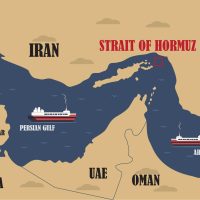
If American carriers face a cost problem, European airlines face an existential supply problem. Half of Europe’s jet fuel comes from the Gulf region. With the Strait of Hormuz closed and no alternative supply route of comparable scale, analysts raised alarm about a systemic jet fuel shortage for European carriers in May and June — the critical months leading into the summer travel season.
Lufthansa CEO Carsten Spohr told employees in a webcast that the carrier was assembling teams to develop contingency plans for multiple scenarios, including drops in demand and a potential inability to obtain sufficient fuel. Airlines for Europe, the industry trade group, sent a letter to the European Union calling for emergency measures: joint purchasing of kerosene and mandatory national jet fuel reserves, modeled on the EU’s joint natural gas purchasing program implemented during the Russia-Ukraine energy crisis in 2022.
Asian airlines have been hit even harder. Cathay Pacific and Singapore Airlines have increased ticket prices on certain routes by as much as 200 percent. Air India, partially backed by Singapore Airlines, canceled 27 percent of its international flights. Budget carriers across the Asia-Pacific — JetBlue equivalents operating on margins that were already razor-thin — are in the most precarious position, because their price-sensitive passengers are the first to disappear when fares rise.
Winners, Losers, and the Summer Ahead
The airline industry’s response to the crisis has split along predictable lines. The large legacy carriers — Delta, United, American in the United States; Lufthansa, Air France-KLM, IAG in Europe — have the financial reserves, the pricing power, and the network flexibility to absorb higher costs, pass some of them through to consumers, and cut capacity on underperforming routes. Their earnings will be damaged but survivable.
Budget carriers face a fundamentally different equation. Their customers are more price-sensitive. Their margins are thinner. Their balance sheets are weaker. And the cost increase they face is the same in absolute terms as the legacy carriers — fuel costs are fuel costs, regardless of your business model. Spirit’s collapse will not be the last, and every budget airline in the world is currently stress-testing its cash position against scenarios its management teams never expected to face.
The summer travel season — which for many airlines represents the difference between a profitable year and a loss-making one — is approaching under conditions of extraordinary uncertainty. Booking trends remain positive: travel agency ticket sales rose 12 percent year-over-year in March to $10.4 billion, with domestic trips up 5 percent and international up 1 percent. Consumers, it appears, still want to fly. The question is whether they will still want to fly when fares have risen 20 to 30 percent and bag fees have increased across the board.
Raymond James airline analyst Savanthi Syth captured the tension: “The positive commentary on demand is still holding, but fuel at $4 to $4.50 a gallon for longer isn’t something airlines can pass through.” Not fully. Not without losing passengers. Not without cutting routes. Not without accepting that 2026 will be a year in which the airline industry — barely recovered from the pandemic, barely adjusted to the post-COVID demand environment — discovers what happens when its largest variable cost doubles in eight weeks.
The earnings reports say the airlines are managing. The fuel receipts say the math doesn’t work. And the summer will determine which assessment is closer to the truth.