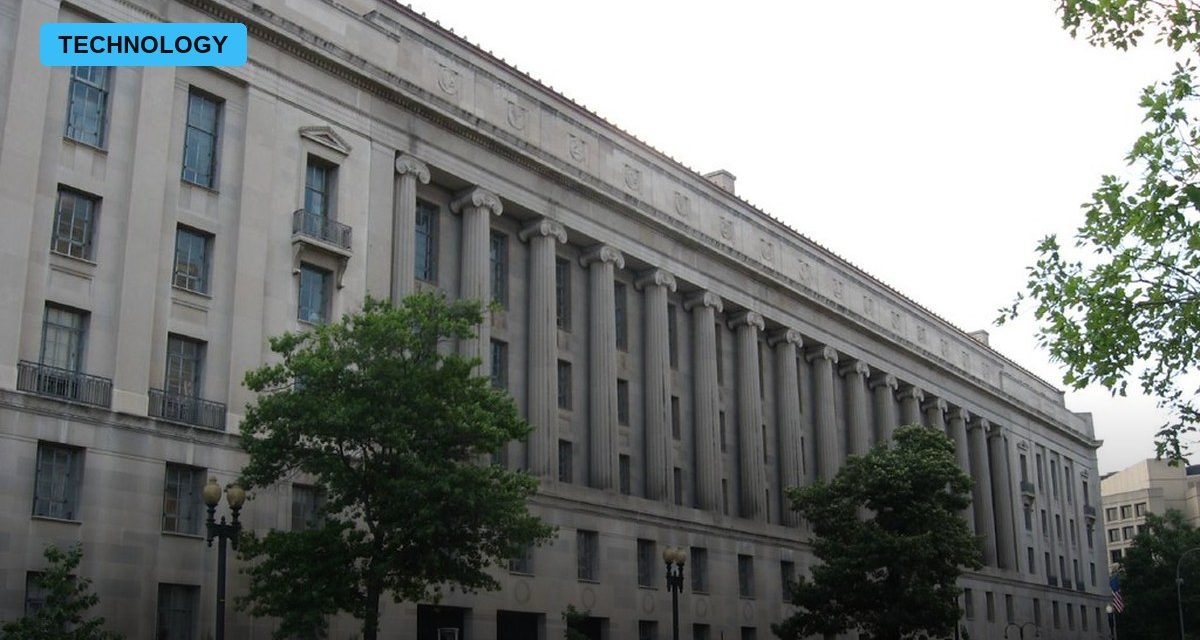
The most consequential technology story of the summer is not a product launch. It is a coordinated move by American regulators to test whether the companies building the AI era have grown too powerful to police. In late July 2026, the Justice Department and the Federal Trade Commission cleared a jurisdictional path to pursue antitrust investigations into Microsoft, OpenAI and Nvidia, while the DOJ pressed ahead with its landmark case against Apple. After years of speeches and warnings, the enforcement machinery is finally turning — and it is aimed squarely at the firms that sit at the center of modern computing.
The Apple Case: Prying Open the Garden
At the heart of the DOJ’s suit against Apple is the ‘walled garden’ — the tightly controlled ecosystem that critics say locks users in and rivals out. The government alleges Apple deliberately restricts super apps, cloud gaming services and cross-platform messaging to make switching away from the iPhone prohibitively difficult and expensive. In the complaint’s telling, these are not accidents of design but deliberate barriers, each one raising the cost of leaving. Apple’s rebuttal is equally forceful: the same integration is what makes its devices secure, private and reliable, and forcing the garden open would hand a gift to competitors while degrading the experience customers actually pay for. The dispute is not merely legal. It is a philosophical fight over whether curation is protection or a moat dressed up as a feature.
The AI Trio Under the Microscope
The newer front is artificial intelligence, and here the stakes are arguably larger. Nvidia now sits atop the technology industry with a market capitalization near $4.7 trillion — ahead of both Apple and Microsoft — having become the indispensable supplier of the chips that train virtually every major model. Regulators are asking whether that dominance, combined with Microsoft’s grip on cloud infrastructure and its deep financial entanglement with OpenAI, has concentrated the entire AI supply chain in too few hands. The FTC is separately scrutinizing whether Microsoft’s $650 million arrangement with Inflection AI was structured to sidestep formal merger review — a so-called acqui-hire that absorbed a company’s talent and technology without triggering the scrutiny a normal acquisition would.
Why the Timing Matters
The probes arrive at a delicate political moment, and their most striking feature is continuity. The Trump administration’s FTC advanced an inquiry into Microsoft’s cloud, AI and software businesses that had actually begun under the prior administration — a rare instance of antitrust enforcement surviving a change in the White House intact. That detail matters because it signals the scrutiny is structural rather than partisan. The concern is concentration itself, in the three layers that make up the AI stack: chips at the bottom, cloud in the middle, models on top. Each layer has a dominant player, and each dominant player is increasingly intertwined with the others, so that a handful of companies effectively underwrite the whole industry.
Two Views of the Stakes
Supporters of aggressive enforcement argue that AI is being locked down before it has even matured, and that early intervention is the only realistic way to keep the market open to startups that cannot possibly afford billions of dollars in compute. Wait too long, they warn, and the structure hardens into permanence. The opposing camp counters that heavy-handed action could hobble the very American firms racing against well-funded Chinese rivals — a race made more urgent by the recent emergence of powerful open models abroad — and that the government risks punishing success in a domain where scale genuinely improves the product. Both sides invoke the national interest. They simply disagree about which threat, monopoly at home or defeat abroad, is the larger one.
What History Suggests
Antitrust against technology giants is not new, and the precedents cut both ways. The Microsoft case of the late 1990s is often credited with clearing space for the internet era, even though the company was never broken up. Other sprawling investigations fizzled after years of expense, leaving the targets essentially untouched. The lesson is that the process itself — the discovery, the depositions, the distraction of senior leadership — can shape corporate behavior even when the courtroom outcome is inconclusive. Companies under scrutiny tend to tread more carefully, and that caution can matter as much as any verdict.
What Comes Next
None of these cases will resolve quickly. The Apple suit could take years to reach trial, and the formal AI investigations may not produce charges at all. But the direction of travel is now unmistakable: the companies that define computing are entering a prolonged period of legal and political friction. Meanwhile, business marches on — Apple is preparing to launch ‘Apple Upgrade,’ a lease-to-own hardware program backed by Klarna and expected to begin July 28, extending its reach even deeper into how customers finance their devices. The contrast captures the moment perfectly. Even as Washington debates how to constrain Big Tech, Big Tech keeps quietly widening the very footprint regulators are struggling to measure.
Photo: Ken Lund / BY-SA via flickr