From a fighter jet escort in Abu Dhabi to a semiconductor pitch in the Netherlands and an Arctic strategy session in Norway, the Indian Prime Minister’s whirlwind tour is the clearest signal yet that New Delhi is done waiting for the world to come to it.
By The Index Today Staff · May 20, 2026 · Asia · 10 min read
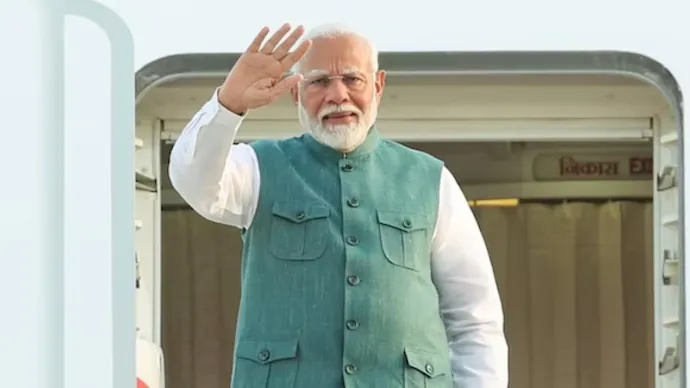
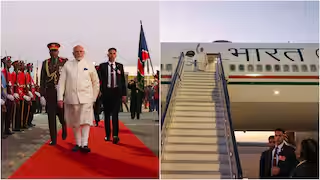
As Indian Prime Minister Narendra Modi’s aircraft entered UAE airspace on the morning of May 15, a formation of F-16 fighter jets rose to escort it. The gesture was military theater at its most precise — a guard of honor at 35,000 feet — but it also captured something larger about the moment. The world’s most populous country, led by its most internationally active prime minister in modern history, was beginning a six-day, five-nation tour that would take him from the oil politics of Abu Dhabi to the semiconductor labs of the Netherlands, from Nordic investment forums to a private dinner with Giorgia Meloni in Rome. The trip was ambitious in scope, dense with deliverables, and conducted against a backdrop that made every handshake feel more consequential than it might have a year ago: the Iran war.
Since late February, when the conflict disrupted the Strait of Hormuz — through which India normally sources roughly half its crude oil — New Delhi has faced an energy vulnerability that is no longer theoretical. India is the world’s third-largest oil importer. Its strategic petroleum reserves cover approximately nine to ten days of consumption, a fraction of the 90-day buffer recommended by the International Energy Agency. Every barrel matters. Every supply route matters. And every diplomatic relationship that touches energy, trade, or maritime security now carries weight that it didn’t carry twelve months ago.
Modi’s tour was designed to address all of it simultaneously.
Abu Dhabi: Four Hours, Five Billion Dollars
The UAE stop was brief — roughly four hours on the ground — but the output was anything but modest. Modi met President Sheikh Mohammed bin Zayed Al Nahyan at the Presidential Airport and moved directly into delegation-level talks that covered energy, defense, investment, and the regional security situation created by the Iran conflict.
The centerpiece was a strategic petroleum reserves agreement between Indian Strategic Petroleum Reserves Limited and ADNOC, Abu Dhabi’s national oil company, allowing the UAE to store up to 30 million barrels of crude in India’s reserve facilities. The arrangement is structurally significant: it gives India a buffer mechanism that can be activated during supply disruptions without requiring emergency procurement at crisis-inflated prices, while giving ADNOC forward-deployed storage in one of its largest consumer markets.
Alongside the reserves pact, various UAE institutions announced approximately $5 billion in planned investments into Indian banking, infrastructure, and finance, with the Abu Dhabi Investment Authority leading commitments to major Indian projects. A long-term LPG supply agreement was signed between Indian Oil Corporation and ADNOC — a deal with direct implications for Indian households, a significant portion of whose domestic cooking fuel comes from the Gulf. And both leaders signed a broadened defense cooperation framework covering advanced defense technology, cybersecurity, intelligence sharing, counter-terrorism, joint military exercises, and maritime security.
Modi, characteristically blunt, told Sheikh Mohammed that “keeping Hormuz free, open and safe is our highest priority” and that “adherence to international laws is essential.” He also condemned recent Iranian attacks on the Emirates — language that positioned India firmly alongside the UAE at a moment when regional alliances are fracturing and reconfiguring at speed.
The subtext was unmistakable. India is no longer content to be a large, passive consumer of Gulf energy. It wants to be a strategic partner — one whose economic scale and demographic weight give it leverage, and whose willingness to invest in shared security infrastructure makes it indispensable.
Europe: Semiconductors, Arctic Shipping, and the Trade Deal That Changed Everything
From Abu Dhabi, Modi flew to the Netherlands — the first European leg of a tour that would also include Sweden, Norway, and Italy. The European agenda was different in texture but equally purposeful.
India and the European Union sealed a comprehensive free trade agreement in January 2026, a deal Modi described at the time as “the mother of all deals.” The agreement, which had been under negotiation for over a decade, unlocked the EU’s access to the world’s most populous consumer market and gave Indian exporters preferential terms in the world’s largest single market. Modi’s European tour was, in part, a victory lap — a demonstration that the deal is already generating momentum.
In the Netherlands, discussions centered on increasing bilateral trade — currently valued at $27.8 billion — and expanding cooperation in defense, semiconductors, water management, agriculture, and health. The semiconductor angle is particularly significant. India has been aggressively courting chipmakers as part of its strategy to become a global manufacturing hub, and Dutch companies — including ASML, whose lithography machines are essential to advanced chip production — are central to that ambition.
Sweden, the next stop, hosted a European business leaders’ forum where Modi appeared alongside European Commission President Ursula von der Leyen. The messaging was coordinated and deliberate: India is open for business, the EU trade deal provides the framework, and the current geopolitical moment — with supply chains under stress and the United States engaged in tariff disputes with much of the world — creates a window of opportunity that both sides intend to exploit.
Norway offered something more unexpected. India operates an Arctic research base on Norway’s Svalbard archipelago, and the discussions in Oslo included the strategic implications of climate-driven Arctic sea route openings for Indian shipping and trade. As Shashi Tharoor, the Indian lawmaker and author, noted in the Indian Express, India’s interest in the Arctic is not academic: the melting of polar ice has direct consequences for the Indian monsoon and for food security across the subcontinent. An India-Nordic Summit addressed these themes alongside clean energy cooperation and investment in green technology.
The final stop was Italy, where Modi met Prime Minister Giorgia Meloni — the two reportedly enjoy a close personal friendship — for discussions on bilateral cooperation and coordination within multilateral forums.
The Bigger Picture
Taken as a whole, the five-nation tour reveals the architecture of India’s current foreign policy with unusual clarity. New Delhi is pursuing what strategists call “multi-alignment” — deep partnerships with the United States, the Gulf states, Europe, and the Global South simultaneously, without committing exclusively to any single bloc. It is a posture that requires enormous diplomatic energy, a willingness to compartmentalize contradictions, and a leader with the personal stature to hold multiple relationships in productive tension.
Modi is uniquely positioned to execute this strategy. He is in his third consecutive term, faces no serious domestic political challenger, and has cultivated personal relationships with an extraordinary range of world leaders — from Sheikh Mohammed to Meloni, from Trump to Macron, from Putin to leaders across Africa and Southeast Asia. The frequency and pace of his international travel is itself a form of statecraft: it signals that India is present, engaged, and unwilling to be taken for granted.
The Iran war has accelerated these dynamics. India’s energy vulnerability has forced New Delhi to move faster on supply diversification, strategic reserves, and alternative trade routes. The disruption of Gulf shipping has made the EU trade deal more important, the UAE energy partnership more urgent, and the Arctic shipping conversation more relevant. In a sense, the crisis has clarified India’s strategic priorities in ways that peacetime complacency never could.
But the tour also exposed a tension that India will need to manage carefully. Modi condemned Iranian attacks on the UAE while standing in Abu Dhabi. Just the day before, he had met with Iranian Foreign Minister Abbas Araghchi in New Delhi. India maintains significant relationships with both sides of the Gulf’s deepening divide — and as that divide widens, the space for diplomatic ambiguity narrows.
For now, however, the tour accomplished what it was designed to accomplish. It secured energy agreements, investment commitments, and defense frameworks. It reinforced India’s position as a preferred partner across multiple geographies. It demonstrated that New Delhi can operate at speed and scale across the most complex diplomatic terrain. And it sent a message — to Washington, to Beijing, to Brussels, and to the Gulf — that India intends to be a shaper of the emerging order, not merely a participant in it.