For the first time since 1947, Japan has a prime minister with both the mandate and the parliamentary numbers to amend its pacifist constitution. The question is no longer whether she will try — but whether the country is ready to let her.
By The Index Today Staff · May 20, 2026 · Asia · 9 min read
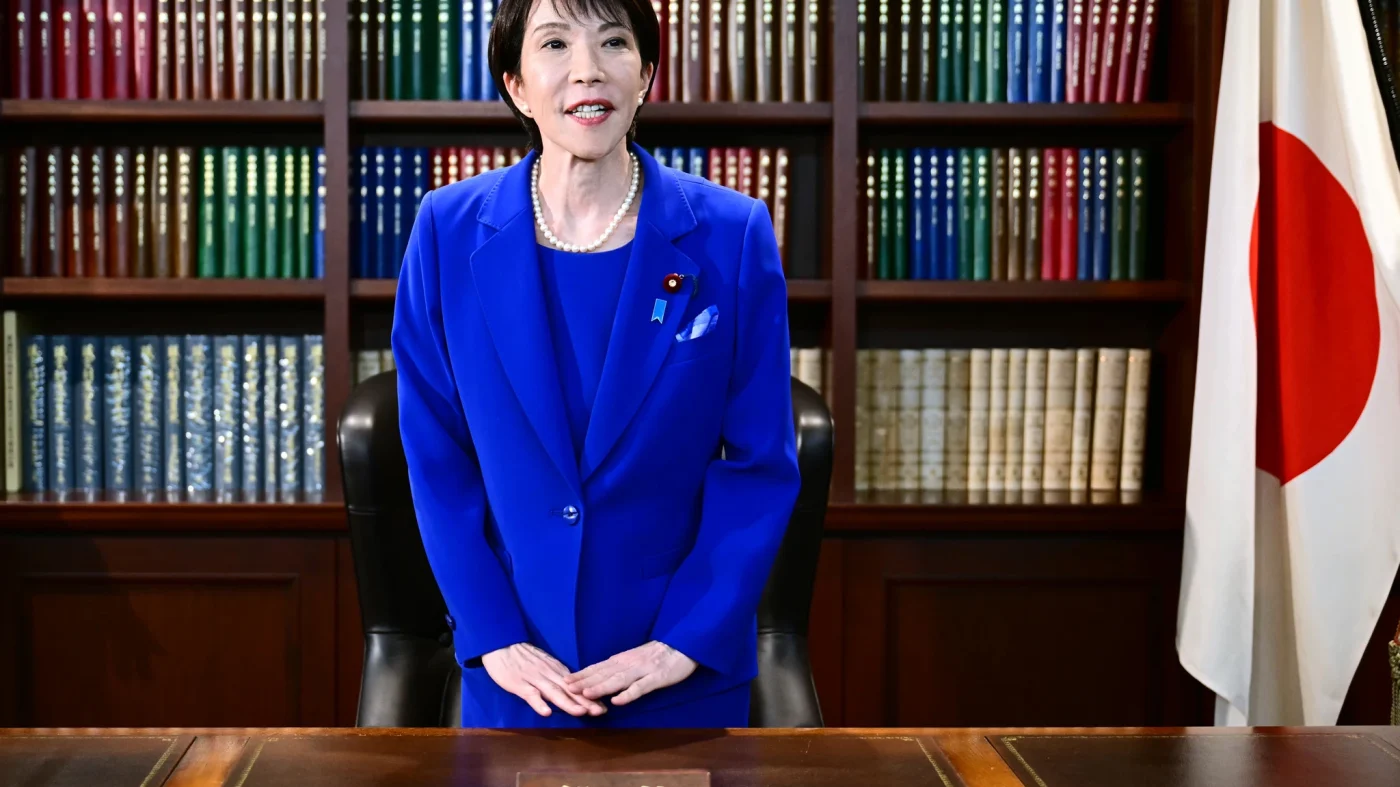
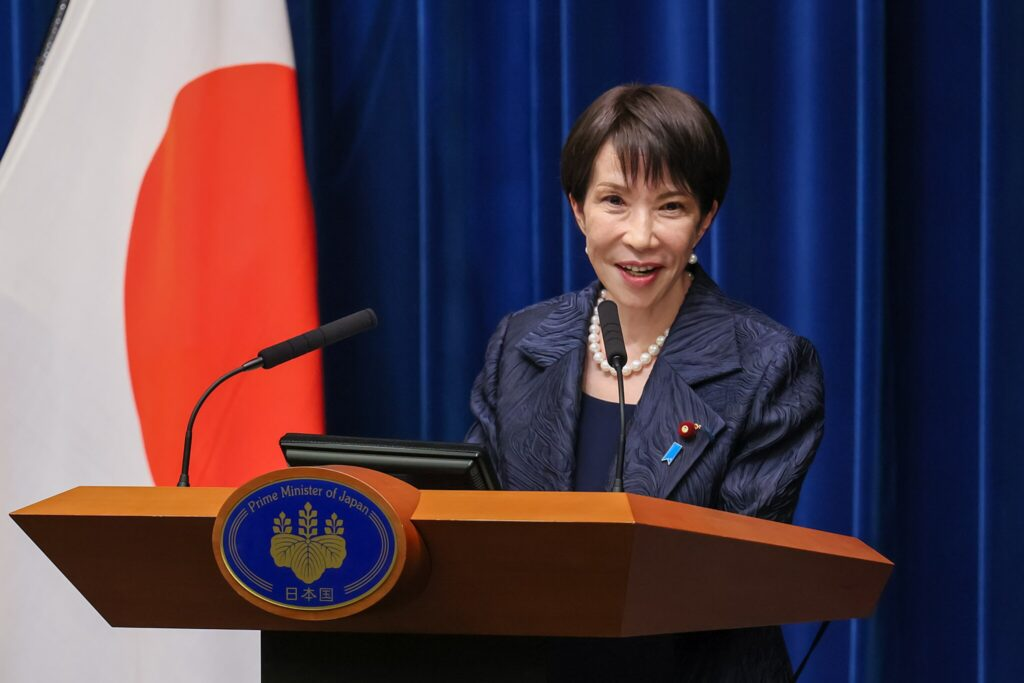
On April 12, standing before the annual convention of the Liberal Democratic Party in Tokyo, Prime Minister Sanae Takaichi made a promise that no Japanese leader before her has been in a position to keep. “Seventy years have passed since the LDP’s founding,” she said. “Let us mobilize the full strength of all party members” to initiate constitutional revision “a year from now.”
The words were carefully chosen. The timeline was not. For the first time in the history of Japan’s postwar democracy, a single party controls a two-thirds supermajority in the lower house of parliament — the threshold required to formally propose a constitutional amendment. The LDP won 316 of 465 seats in the House of Representatives in a February snap election that Takaichi called, and won, on a platform that made defense expansion and constitutional reform its centerpiece. It was the most commanding electoral mandate the LDP had received in decades, and Takaichi — Japan’s first female prime minister — intends to use it.
At the center of the debate is Article 9, perhaps the most consequential legal provision in modern Asian history. Drafted by American lawyers during the Allied occupation and adopted in 1947, it states that Japan “forever renounces war as a sovereign right of the nation” and that “land, sea, and air forces, as well as other war potential, will never be maintained.” For nearly eighty years, this clause has defined Japan’s identity as a pacifist nation — even as the country built one of the most sophisticated and capable military forces on earth under the deliberately modest title of the Self-Defense Forces.
Takaichi wants to change the words. And the consequences of that change would reshape the security architecture of the entire Indo-Pacific.
What She’s Actually Proposing
Despite the dramatic framing — and despite the alarm the issue generates in Beijing, Seoul, and among Japan’s own pacifist movements — the likely revision is narrower than the rhetoric suggests. Takaichi has not proposed scrapping Article 9 entirely or restoring Japan’s pre-war military posture. What she has indicated, in speeches and press conferences throughout the spring, is an amendment that would explicitly recognize the Self-Defense Forces as a legitimate armed organization within the constitutional text.
This may sound technical. It is not. The absence of constitutional recognition has created a legal and political ambiguity that has constrained Japanese defense policy for decades. The SDF exists, commands a budget exceeding $50 billion, operates advanced fighter aircraft, guided-missile destroyers, and submarine fleets — and yet it occupies a constitutional gray zone. Its members serve their country without the legal clarity that soldiers in every other advanced democracy take for granted. Takaichi has framed the issue in explicitly human terms: it is about the dignity and pride of the men and women who serve.
The late Shinzo Abe, Takaichi’s political mentor and Japan’s longest-serving prime minister, laid the groundwork for this moment. In 2014, his government reinterpreted Article 9 to allow “collective self-defense” — the right to come to the aid of allies under certain conditions. In 2017, he proposed adding language to Article 9 that would formally acknowledge the SDF while preserving the article’s pacifist framework. But Abe could never assemble the parliamentary numbers or the public consensus to push the amendment through. He stepped down in 2020 and was assassinated in 2022.
Takaichi has inherited Abe’s ambition and, with her February landslide, the parliamentary arithmetic he never achieved.
Why Now
The timing is not accidental. Japan’s security environment has deteriorated in ways that would have been difficult to imagine when Abe first raised the issue of constitutional revision a decade ago.
North Korea’s missile program has accelerated. Pyongyang has conducted repeated launches of intercontinental ballistic missiles and continues to develop nuclear warheads that could reach Japanese territory. China’s military buildup — including a rapidly expanding navy, the world’s largest coast guard, and increasingly assertive operations near Japanese-controlled islands in the East China Sea — represents a direct challenge to Japanese sovereignty. The Taiwan Strait, just a few hundred kilometers from Japan’s southwestern islands, has become the most dangerous flashpoint in the region. A Chinese move against Taiwan would almost certainly draw Japan into a conflict, whether or not its constitution acknowledged the reality of its military capabilities.
And then there is the Iran war. The conflict that began in late February 2026 has drawn significant American military assets away from the Indo-Pacific — a reallocation that has not gone unnoticed in Tokyo. Japan’s alliance with the United States remains the cornerstone of its security strategy, but the war has exposed a structural vulnerability: American attention and resources are finite, and Asia’s security challenges may not always be Washington’s top priority.
Takaichi has responded to this environment with a series of policy moves that, taken together, represent the most significant expansion of Japanese defense capabilities since the end of World War II. Defense budgets have risen sharply. Counterstrike capabilities — the ability to hit enemy launch sites before missiles are fired — have been authorized and are being developed. Long-range missile programs are advancing. And just this month, Japan scrapped a longstanding ban on the export of lethal weapons, opening the door for Japanese defense companies to compete in international arms markets for the first time.
Constitutional revision would be the capstone of this transformation — the legal acknowledgment of a reality that has already taken shape in practice.
The Obstacles
The path from Takaichi’s convention speech to an amended constitution remains steep. Japan’s amendment process is among the most demanding in the democratic world. A proposed amendment requires two-thirds approval in both houses of the Diet — the lower House of Representatives and the upper House of Councillors — followed by a national referendum requiring a simple majority of voters.
Takaichi has the lower house. She does not have the upper house. The LDP and its coalition partners remain short of a two-thirds majority in the House of Councillors, where the opposition Constitutional Democratic Party of Japan and other progressive parties hold enough seats to block an amendment proposal. The next upper house election is not until 2028, and Takaichi’s ability to gain the necessary seats is far from guaranteed.
Even if she cleared the parliamentary threshold, the national referendum would present its own challenges. The LDP’s total vote share in the February election was 37 percent — a commanding seat count thanks to the mechanics of Japan’s electoral system, but not necessarily an indicator of majority public support for constitutional change. Polling on Article 9 revision has historically been close to evenly split, with significant generational and regional variation.
And then there is the Pandora’s Box problem. A senior Japanese official, speaking to reporters in March, warned that opening the constitution for the first time in its history could invite demands from opposition parties for their own amendments on issues entirely unrelated to defense — changes that the LDP might find deeply unwelcome. The constitution has never been amended since its adoption in 1947. Once that precedent is broken, the scope of what can be changed expands in unpredictable ways.
The Regional Response
The prospect of a constitutionally empowered Japanese military reverberates differently across Asia depending on where you stand.
China has been the most vocal critic. Beijing views Article 9 as a binding legacy of Japan’s wartime defeat — a set of obligations imposed on a nation that inflicted enormous suffering across Asia, and that the international community should hold Japan to in perpetuity. Chinese Foreign Ministry spokesperson Lin Jian stated that the Cairo Declaration, the Potsdam Proclamation, and the Japanese Instrument of Surrender define Japan’s obligations as a defeated country, and that fulfilling them is the prerequisite for Japan’s membership in the international community.
South Korea’s response has been more muted but no less watchful. Historical memory of Japanese occupation remains a powerful force in Korean politics, and any move to formalize Japan’s military capabilities triggers anxiety — even as Seoul and Tokyo have drawn closer together in response to shared threats from North Korea and China.
The United States, by contrast, would likely welcome the revision. Washington has long urged Japan to take on a greater share of the burden for its own defense and for regional security. A Japan with a constitutionally recognized military would be a more capable and reliable alliance partner — one less constrained by legal ambiguity in crisis scenarios involving Taiwan, the Korean Peninsula, or maritime confrontations in the East China Sea.
What It Means
Takaichi has been careful to frame the revision as making Japan “a normal country” in terms of international rights and responsibilities — not as a return to militarism. Nuclear weapons remain off the table. Offensive campaigns of the kind Japan waged in the early twentieth century are not on the agenda. The revision, if it comes, would formalize what already exists and remove constraints that most Japanese defense officials consider anachronistic.
But symbolism matters in Asia, and the symbolism of Japan amending Article 9 would be profound. It would mark the definitive end of the postwar order as it was originally conceived — the order in which Japan’s renunciation of war was not merely a policy choice but a constitutional identity. It would signal to the region that the era of Japanese restraint, however effective it was in maintaining peace for eight decades, has given way to a new calculus driven by threat perception, alliance management, and the unforgiving logic of great-power competition.
Whether Takaichi can achieve what Abe could not — whether she can navigate the parliamentary arithmetic, the public referendum, and the diplomatic fallout — remains genuinely uncertain. But the direction of travel is clear. Japan is arming. Japan is asserting. And Japan’s quiet revolution, led by a prime minister who speaks softly but carries a supermajority, is the most consequential political development in Northeast Asia in a generation.