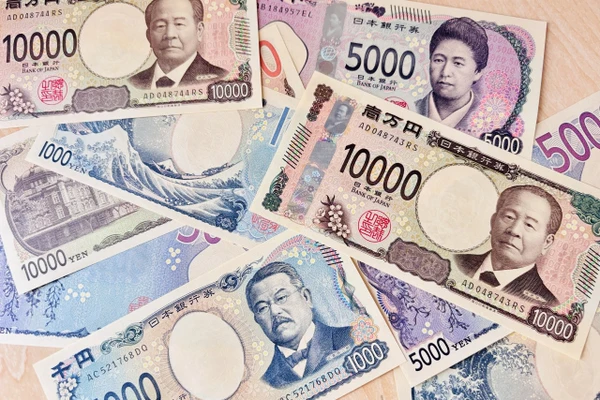
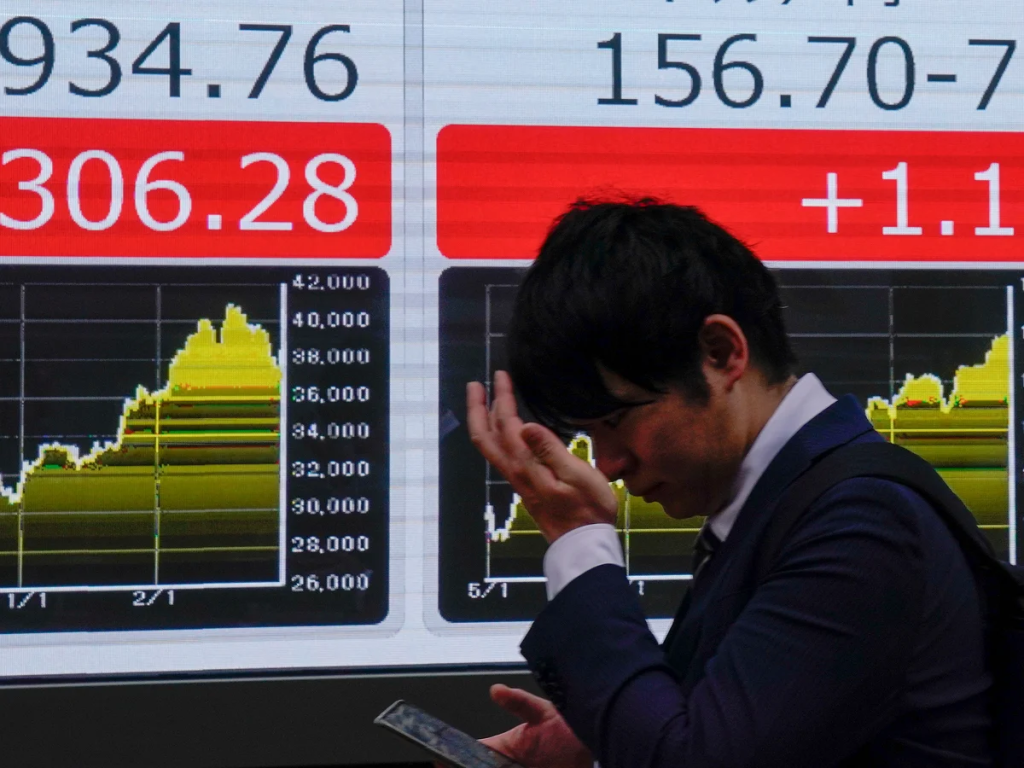
Japan has spent an estimated ¥10 trillion intervening in currency markets since April. The yen is back near 160 against the dollar. The Bank of Japan is trapped between inflation it can’t ignore and rate hikes it’s afraid to deliver. And the carry trade that is bleeding the currency dry shows no sign of stopping.
By The Index Today Staff · May 20, 2026 · Currency · 9 min read
On April 30, as the dollar-yen exchange rate breached the politically sensitive level of 160 — a threshold that Japanese authorities had repeatedly warned markets not to test — the Ministry of Finance gave an order that sent shockwaves through the foreign exchange market. Within hours, the yen surged three percent, the kind of violent move that only one force in the currency market can produce: direct government intervention.
Tokyo did not confirm the operation. It never does immediately. The strategic ambiguity is intentional — an element of surprise designed to maximize market impact and discourage speculators from testing the same level again. But analysis of the Bank of Japan’s accounts, combined with the sheer scale and velocity of the yen’s appreciation, left little doubt. Japan’s finance ministry had spent an estimated 5.48 trillion yen — roughly $35 billion — in a single session to prop up its own currency. It was the largest yen-buying intervention since July 2024 and just shy of the record.
It didn’t work. Or rather, it worked for about three days.
By the second week of May, the yen had surrendered roughly half its gains. Another round of suspected intervention during the Golden Week holiday period — bringing the estimated total to ¥10 trillion, or approximately $63 billion — produced a similarly temporary reprieve. As of mid-May, the yen is trading near 159 against the dollar, drifting back toward the very level that triggered the intervention in the first place.
Japan is trapped in a currency defense that it cannot afford to lose and cannot seem to win. Understanding why requires unpacking three forces that are converging against the yen simultaneously — and the institutional paralysis that prevents the one actor capable of resolving the crisis from acting decisively.
The Carry Trade
The fundamental driver of yen weakness is not speculation in the traditional sense. It is arithmetic. The Bank of Japan’s policy rate stands at 0.75 percent. The U.S. Federal Funds rate sits at 3.50 to 3.75 percent. That gap — approximately 300 basis points — creates one of the most reliable profit opportunities in global finance: the yen carry trade.
The mechanics are simple. Borrow in yen at close to nothing. Convert to dollars. Invest in higher-yielding American assets — Treasuries, corporate bonds, money market funds. Pocket the spread. The trade has existed for decades, waxing and waning with the interest rate cycle. But in 2026, the conditions are nearly perfect: Japan’s rates are among the lowest in the developed world, American rates remain elevated, and the yen’s depreciation trend adds currency profit on top of the interest rate differential.
The result has been what Monex Group’s Jesper Koll described as “relentless” capital outflows from Japan, driven by both institutional and retail investors. Japanese fixed-income returns are deeply unattractive in real terms — the Bank of Japan remains the only major central bank allowing negative real interest rates. Domestic investors “have zero tolerance for negative returns on their capital,” Koll said, and they are voting with their portfolios, moving money offshore at scale.
This is not a speculative attack on the yen. It is a rational response to an interest rate structure that punishes anyone who holds yen-denominated assets. And no amount of intervention can overcome it as long as the rate differential persists.
The Energy Vulnerability
The Iran war has compounded the yen’s structural weakness with a cyclical shock that strikes at Japan’s most fundamental economic vulnerability: its near-total dependence on energy imports. Japan imports virtually all of its oil and natural gas. A large share historically has transited the Strait of Hormuz. The closure of the Strait, the surge in global energy prices, and the sustained elevation of Brent crude above $100 per barrel have blown a hole in Japan’s trade balance and pushed the yen lower at precisely the moment when monetary authorities were trying to stabilize it.
The mechanism is straightforward. Higher energy import costs mean more yen being sold to purchase dollar-denominated oil and gas. A weaker yen, in turn, makes those imports more expensive in local currency terms, creating a self-reinforcing cycle of depreciation and inflation. The Bank of Japan raised its core inflation outlook for fiscal year 2026 to 2.8 percent — up sharply from 1.9 percent — citing exactly this dynamic. At the same time, it slashed its growth forecast to 0.5 percent from 1.0 percent.
Oxford Economics’ Shigeto Nagai described the emerging picture as “a very light stagflation-like situation” — stagnant growth paired with persistent inflation, the worst combination for a central bank trying to decide whether to tighten or ease.
The BOJ’s Impossible Position
The Bank of Japan is the central actor in this drama, and it is paralyzed. The case for raising rates is strong and growing stronger. Inflation is running above the 2 percent target and accelerating. Wage growth is at its highest level in three decades, exceeding 4 percent. The yen’s weakness is imported inflation on autopilot — every week that rates remain unchanged, the carry trade extracts more capital, the currency weakens further, and prices rise.
At the April meeting, three of nine board members — Hajime Takata, Naoki Tamura, and Junko Nakagawa — voted to raise rates to 1.0 percent. They were outvoted 6-3, but the minutes revealed a board that is increasingly hawkish. One member argued for raising rates “without hesitation” if upside inflation risks intensify. Another said it was “quite possible” the board could hike from the next meeting onward, even amid Middle East uncertainty.
And yet the BOJ held. The reasons are partly economic — a 0.5 percent growth forecast leaves little room for policy error — and partly institutional. The BOJ spent decades fighting deflation. Raising rates into an energy-driven cost shock, with growth already weakening, runs counter to every instinct the institution has developed over the past 30 years. There is also the government bond market to consider: Japan’s debt-to-GDP ratio exceeds 250 percent, and higher rates would dramatically increase debt servicing costs. The 10-year Japanese government bond yield hit 2.496 percent in April — the highest since 1997 — a reminder of the fiscal consequences that rate normalization carries.
State Street’s Masahiko Loo framed the April decision as “as much about currency defense as inflation control” — a signal that the BOJ recognizes the yen’s weakness is unsustainable even if it cannot bring itself to address it decisively. The “line in the sand,” Loo suggested, is approximately 162 yen to the dollar — a level beyond which the economic and political costs of inaction become unbearable.
The Limits of Intervention
Currency intervention, in the absence of fundamental policy change, is a holding action — not a solution. Japan learned this lesson in the 1990s, in 2022, in 2024, and it is learning it again now. The $63 billion spent since late April has bought time, but it has not altered the rate differential that drives the carry trade, the energy import costs that weigh on the trade balance, or the BOJ’s reluctance to normalize rates at speed.
U.S. Treasury Secretary Scott Bessent has indicated support for Japan’s stabilization efforts, and Finance Minister Satsuki Katayama has signaled that there is no limit to how often authorities can intervene. But the reserves are finite, the market’s patience is not, and every intervention that fails to hold the line undermines the credibility of the next one.
The yen’s predicament is, in some sense, a microcosm of the broader challenge facing central banks in 2026: how to manage the collision between supply-side inflation driven by geopolitical shocks, demand-side weakness driven by the same shocks, and currency pressures that punish any institution that moves too slowly. The Bank of Japan has the tools to resolve the crisis. A credible commitment to a rate-hiking path — 1.0 percent by mid-year, with guidance for further increases — would narrow the carry trade differential, stabilize the yen, and signal that Japan’s era of ultra-loose monetary policy is genuinely over.
Whether the BOJ has the institutional will to use those tools, in the face of growth uncertainty and the fiscal consequences of higher rates, is the question that every yen trader, every Japanese household paying more for imported food and fuel, and every foreign investor holding Japanese assets is waiting to have answered.
The yen is telling them not to hold their breath.