The two-day meeting at the Great Hall of the People delivered a framework for “strategic stability” — but neither breakthroughs nor the 500 Boeing jets the White House had floated. For Asia, the real signal was what Xi refused to concede.
By The Index Today Staff · May 20, 2026 · Asia · 9 min read
For 43 hours, the world’s two most powerful leaders were in the same building. By the time Air Force One lifted off from Beijing Capital International Airport on the afternoon of May 15, the Trump-Xi summit had produced a warm handshake, a state banquet, a gift of rose seeds, a pledge to develop what Beijing is now calling a “constructive China-U.S. relationship of strategic stability,” and an order for 200 Boeing jets. What it had not produced was anything resembling the grand bargain that both capitals had spent months positioning themselves to claim.
President Donald Trump arrived in Beijing on May 14 seeking relief on multiple fronts simultaneously. The war in Iran — which delayed the summit by more than a month — has strained American resources, fractured diplomatic bandwidth, and complicated Trump’s political positioning ahead of the 2026 midterm elections. A major trade breakthrough with China, complete with splashy procurement deals and visible corporate wins, would have offered the kind of headline the White House badly needed. China, for its part, wanted something subtler but arguably more valuable: a framework that locks the United States into predictable behavior for the remainder of Trump’s term and beyond.
Both leaders got pieces of what they wanted. Neither got all of it. And the gap between what was expected and what was delivered tells a story about the current balance of power between Washington and Beijing that the rest of Asia is reading very carefully.
The Optics and the Substance
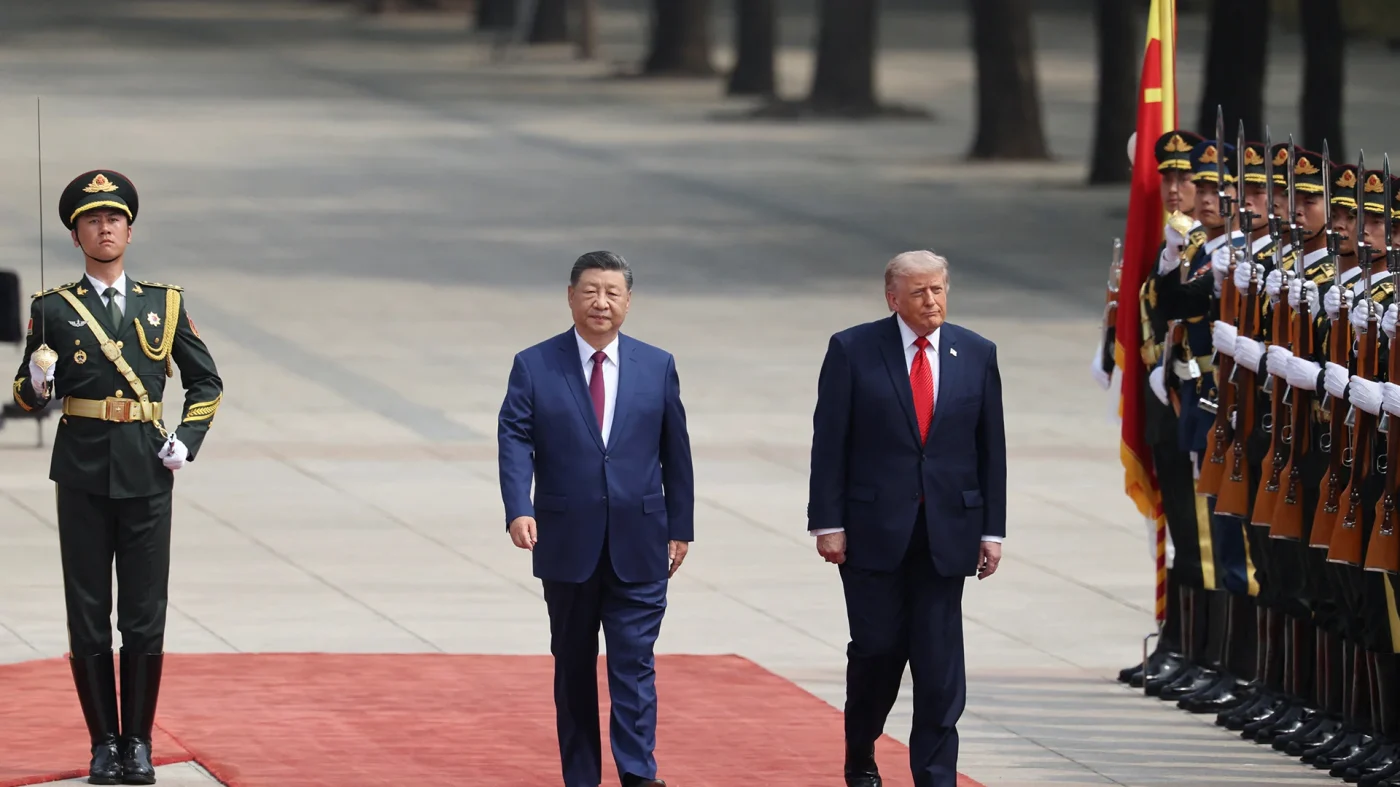
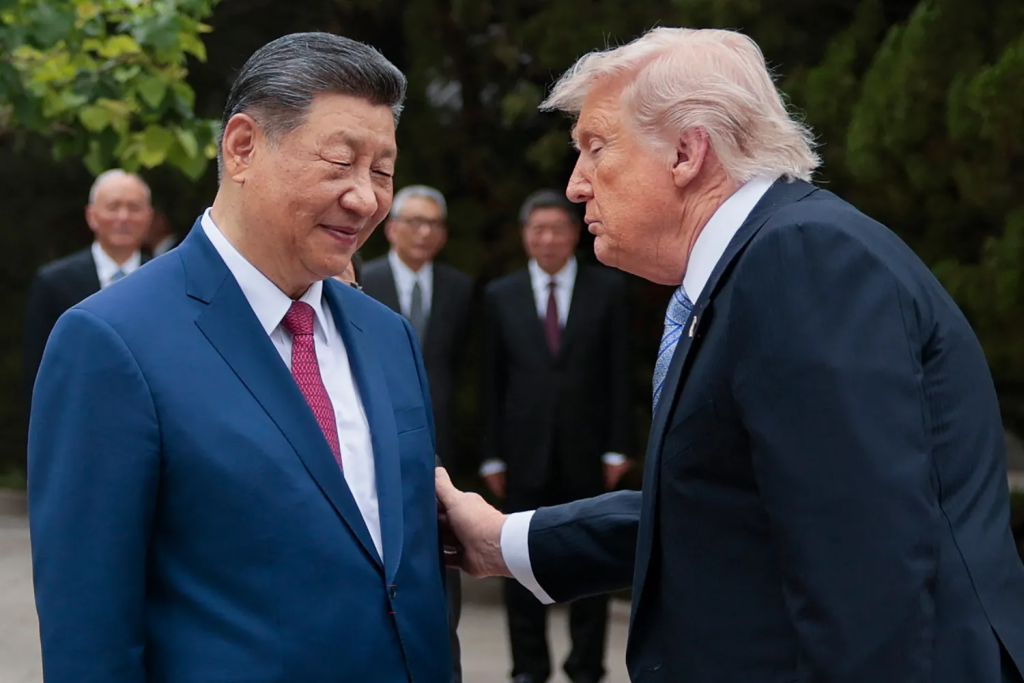
The ceremony was textbook Beijing. Military honors at the Great Hall of the People. Flag-waving children lining the route. A state banquet with toasts to health and friendship. Trump, never one to undervalue spectacle, responded in kind — praising China as “a beautiful place” and calling Xi “a great leader.” The personal warmth between the two men, which dates back to Trump’s first term and has survived tariff wars, pandemic-era hostility, and profound strategic disagreements, was on full display.
Behind the photo opportunities, the substance was more complicated. The centerpiece commercial deliverable was Boeing. Trump told Fox News that Xi would order 200 jets — “big ones” — a figure he framed as exceeding the 150 units Boeing had initially expected. But it was less than half the 500 aircraft that had been floated in pre-summit speculation. Boeing shares fell four percent on Wall Street the day the number was confirmed. It was China’s first major Boeing order since Trump’s 2017 Beijing visit, when 300 planes were agreed upon. But after nearly a decade of deteriorating relations and a sustained Airbus offensive in the Chinese market, 200 felt like a floor, not a ceiling.
Nvidia reportedly secured clearance to sell its H200 chips to select Chinese companies — a meaningful concession that sent technology stocks higher. But the broader tech restrictions, including entity list designations and export controls on advanced semiconductors, remained firmly in place. The U.S. delegation included more than a dozen CEOs — Tim Cook of Apple, Jensen Huang of Nvidia, Kelly Ortberg of Boeing, and Elon Musk among them — who participated in a separate meeting with Chinese Premier Li Qiang. The corporate diplomacy signaled engagement. It did not signal resolution.
Taiwan: The Line Xi Drew
The most consequential moment of the summit may have been the one that received the least theatrical treatment. According to official Chinese state media, Xi Jinping told Trump directly that mishandling Taiwan would put the entire U.S.-China relationship into “great jeopardy.” The language was unambiguous and, by the standards of Chinese diplomatic communication, unusually blunt.
Taiwan has always been the most sensitive issue in the bilateral relationship, but Xi’s decision to lead with it — rather than bury it beneath trade discussions or climate pledges — was a strategic choice. It signaled that Beijing views the current moment as one in which it holds enough leverage to make demands rather than requests. Congressional reaction in Washington was swift and bipartisan: Democrats criticized Trump for appearing too accommodating toward Beijing, while Republicans stressed that economic engagement must not come at the cost of deterrence in the Taiwan Strait.
Taipei, as always, watched nervously. Taiwan’s concern before any U.S.-China summit is that its interests will be traded away to secure progress on whatever issue dominates the agenda. The fact that Xi chose to elevate Taiwan so prominently suggests that Beijing wanted to test whether Trump’s transactional instincts could be directed toward a softer posture on cross-strait relations. Whether that test succeeded or failed will become clearer in the months ahead.
What Beijing Actually Won
The emerging consensus among analysts is that Xi got the better end of the exchange — not because of any single concession, but because the summit’s framing itself favored Beijing’s objectives. The agreement to pursue “strategic stability” gives China a rhetorical framework it can invoke to resist further American pressure on trade, technology, and military posture. As Jack Lee of China Macro Group observed, Beijing appears to be trying to turn Trump’s transactional willingness to stabilize ties into a longer-term operating framework — one that could outlast this administration and become a baseline for the next U.S. president.
Xi welcomed Trump with every honor, conceded nothing of strategic significance, and emerged with a narrative of responsible great-power leadership that plays well both domestically and across the Global South. The Boeing order, while smaller than hoped, was large enough to prevent the summit from being characterized as a failure. The invitation for another meeting in the fall ensures continued diplomatic momentum. And the absence of any American progress on the Iran question — which the White House had hoped Beijing might help mediate — underscored the limits of personal rapport as a tool of statecraft.
What This Means for the Region
For the rest of Asia, the summit confirmed several things that were already suspected but are now harder to ignore. First, the U.S.-China relationship is settling into a pattern of managed competition rather than spiraling confrontation — a reality that gives middle powers more room to maneuver but also more pressure to choose. Second, Taiwan remains the single most dangerous flashpoint in the region, and Beijing is becoming increasingly explicit about drawing red lines. Third, the era of summit-driven breakthroughs in the bilateral relationship is probably over. The complexity of the issues, the depth of structural competition, and the domestic political constraints on both leaders make transformative deals exceedingly unlikely.
What remains is something more modest but perhaps more durable: a commitment to keep talking, to avoid miscalculation, and to manage the most consequential relationship in global politics without allowing it to become the most destructive one. Whether that is enough will depend not on summits, but on the daily accumulation of decisions — on chips and ships, on tariffs and Taiwan, on the thousand small choices that determine whether two superpowers coexist or collide.